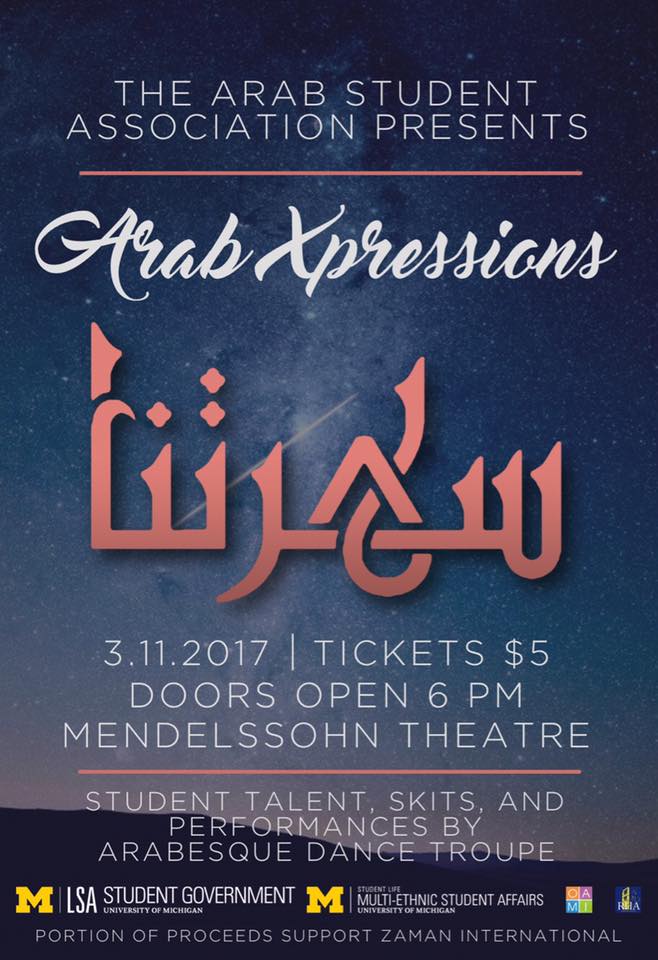
This weekend,6PM Saturday, March 11th, join the Arab Student Association’s show “Arab Xpressions” at the Mendelssohn Theater. There will be performances by students in the group, as well as skits and dances by an arabesque dance troupe. Refreshments will also be served promptly at 6.
Tickets will only be $5 at the door to students. Half of all the proceeds from the night will be donated to the humanitarian organization Zaman International. There are also several free tickets left at the Office of Multicultural Ethnic Students Affairs left to the first students who show up!
Situated in the upper most balcony of Hill Auditorium, the view was much better than I had expected it to be (the eternal feeling of falling forward, out of the balcony and towards the stage, though, was entirely expected of Hill). The space lacked the closeness I normally look forward to in concerts, where it feels like a conversation with the performers, rather than an arena-style, bird’s-eye-view. Both the members of the opening act, Whitney, and the Head and the Heart worked to create what intimacy they could, chatting back and forth with an expansive and faceless audience. The crowd, much to my surprise, was made up of largely older couples. It could be that I’ve created the illusion of the late-teens/early twenties indie audience based off of one too many music festivals; likely, Ann Arbor is more conducive to a wide-range, indie folk audience than elsewhere.
The stage was set like the cover of the Head and the Heart’s new album, Signs of Light. Potted palm-fronds were scattered throughout, with a neon sign that evoked only the best new-agey seventies vibes. It transformed Hill from a concert hall into almost a basement lounge atmosphere (filled with all 3,500 of your friends), aided by the performers continual toasting of red Solo cups. While the setting of Hill relaxed its “acoustical perfection” for a more casual atmosphere, elements of its austere presence remained.
For this concert, especially with how chummy and charismatic the performers worked to be, I just wanted to be able to dance. One of my favorite benefits of live music is being able to stand uncomfortably close to the stage, being able to feel the music of the speakers shake the floor, the air, and the crowd, and watching everyone dance however they feel moved. In Hill, I could look down from the balcony to see maybe two or three carefree listeners dancing in the aisles, but the rows upon rows of chairs, as well as the added threat of height, kept most in their seats. The opening band complemented The Head and the Heart’s music, adding a bit more of an indie-pop feel to the feature’s folk vibe. I loved the incorporation of a trumpet into the band, adding a bit of an unexpected (though not unseen in contemporary music) twist to their music. The Head and the Heart performed many of their most popular works – namely “All We Ever Knew”, “Lost in My Mind”, and ending with “Rivers and Roads” – in quick succession, moving from one piece to another.
All in all, I loved being able to watch the Head and the Heart perform so close to home, a chance that seems to be getting smaller and smaller as their popularity grows. It made me crave the intimacy and closeness that smaller spaces like The Ark provide (that also allow for the glorious choice of sitting, standing, or dancing), but I can’t denounce a venue that’s directly on campus and offers an unobstructed view and acoustical perfection of a front-running indie band. Their folksy, sweet Americana feel makes for a nice addition to any upcoming summertime soundtrack.
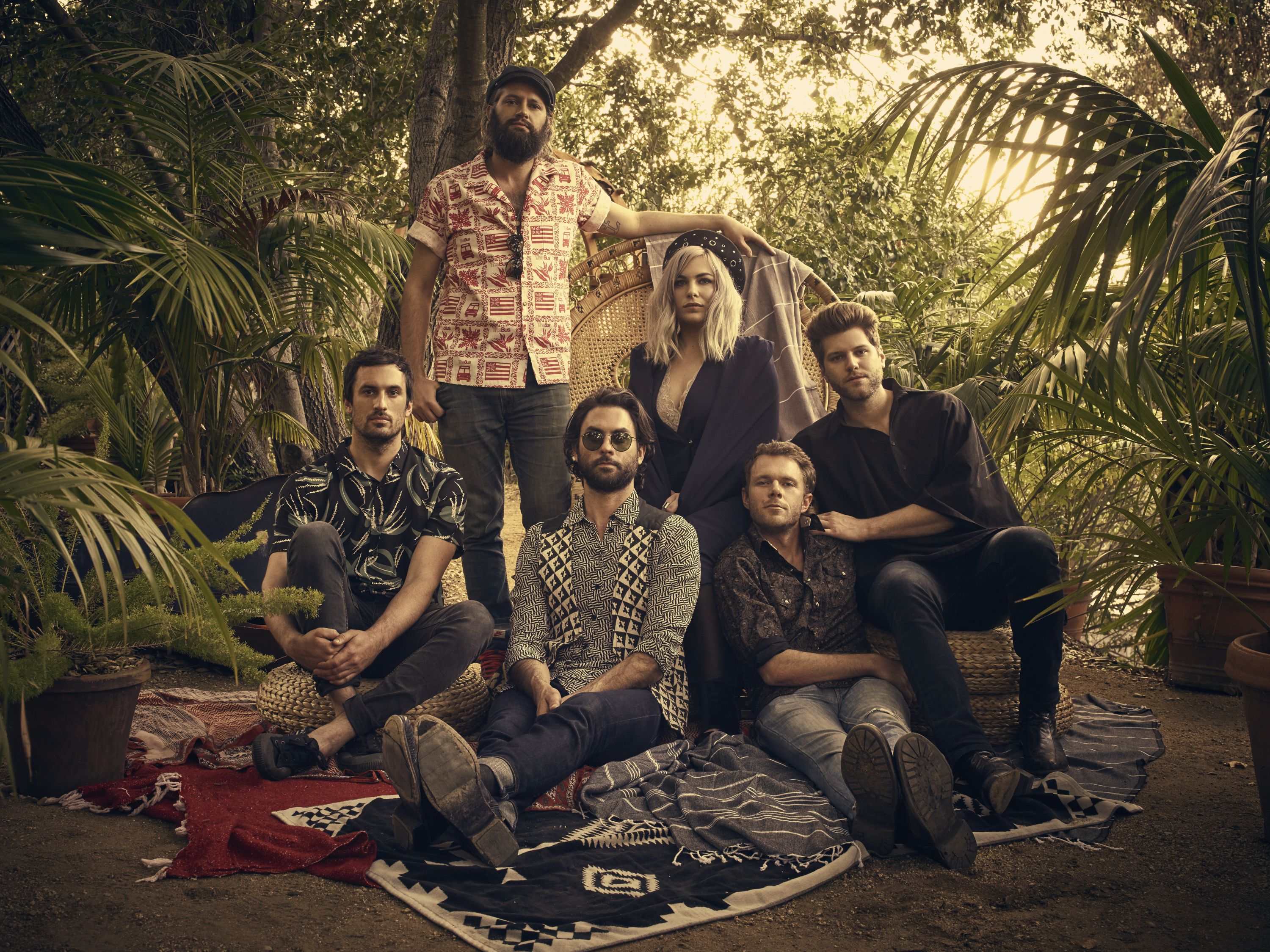
A part of their Signs of Light tour, the indie-folk group will be performing with the opening band Whitney. If you’re looking to catch the rapidly-rising Head and the Heart in your own Ann Arbor backyard (they’re also set to perform at The Governor’s Ball, Bonnaroo, and Coachella for this summer’s festival season), the performance will be held at Hill Auditorium on February 28, at 8 pm. Tickets range from $30-$40.
The Head and the Heart’s work first entered into my orbit of interest with their self-titled 2010 album (my favorite track being “Ghosts”). Their song “Rivers and Roads” is probably most notable, even to those who don’t initially recognize the band’s name. It’s feature on the season finale of TV’s New Girl sent me frantically searching for the artist of the song, and thus an interest was born. Their songs have woven their way through various Spotify playlists of mine, though I’ve got a ways to go before I could classify myself a fully-versed fan. I think this will be quickly corrected, though, for their natural sound makes for a great live experience.
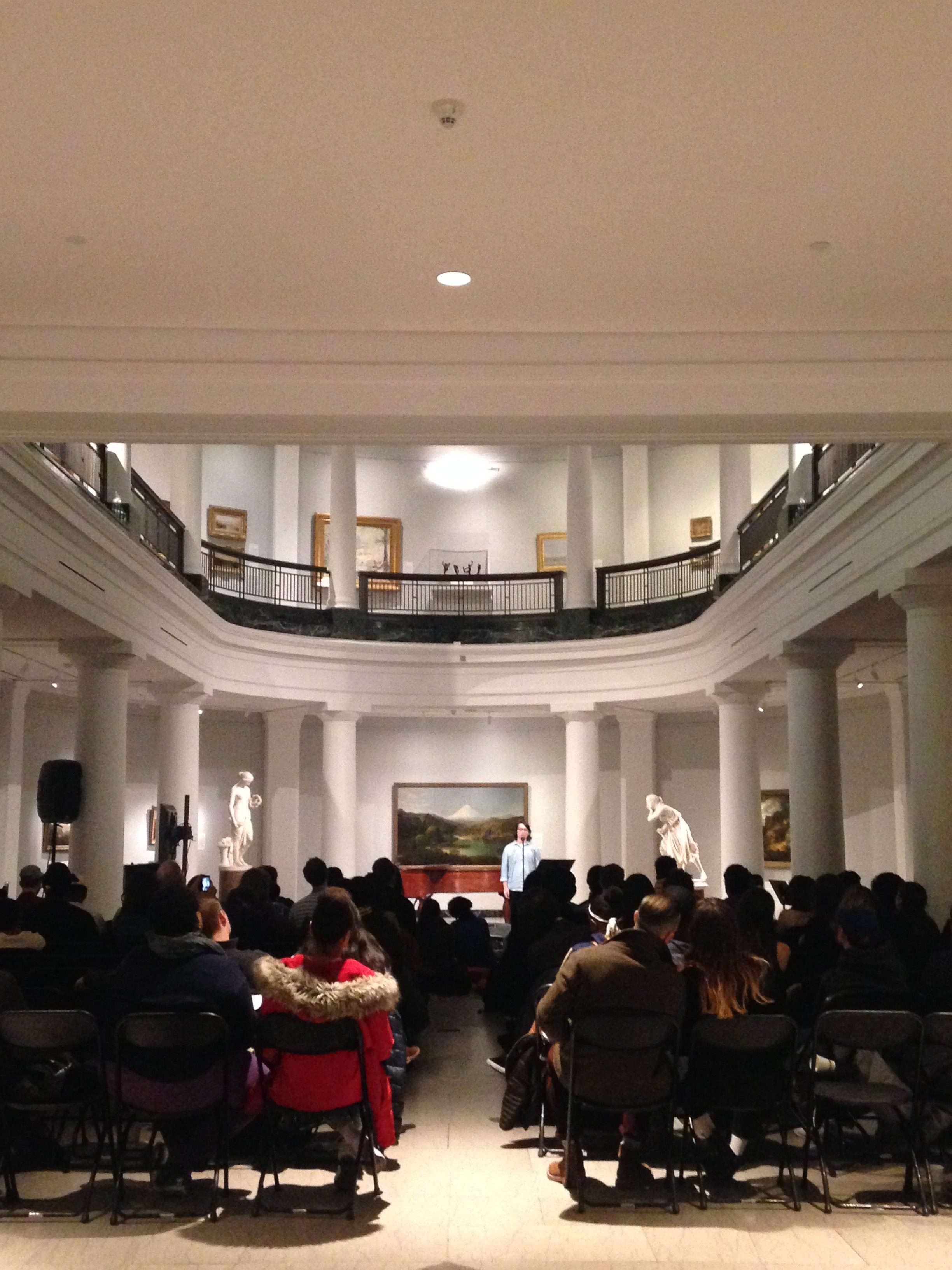
Walking into the museum space, the former white, marble-esque floor was covered by carpets, pillows, and tea lights’ electronic flicker. It looks like it could be the second floor of your favorite local-coffee-shop-poetry-reading, if they too were surrounded by renowned works of art. Often, UMMA’s space can appear a bit aloof, a bit austere and refined, but for this night it was transformed into a warmer, more intimate atmosphere. People mingled in, munching away on their biscotti and hot chocolate (again, your local coffee-shop-vibes), and ArtsX opened with emphasizing the importance of sharing our experiences through the various forms of art. I loved that all the different forms of art and expression flowed together, as if they were created with the intention to work in succession. With the spoken word and poetry pieces, voices and words filled the space. Perhaps it is a bit contrived, but I liked to imagine that these intangible words, pieces of art themselves, hung in the art alongside the paintings, student contributions adding to a recording of human experience.
The first few pieces, a musical duo that may have changed my mind towards jazz music and spoken word poetry that painted a picture of the museums of the future looking make on today’s society’s mistakes, served to set the tone of students sharing their experiences and voices for other students. One of my favorite pieces of the night, an unexpected form amongst the more customary fields of song and poetry, was the work of Sarah Baruch titled Here I Am, How Did I Get Here and Where am I Going?. Chronicling her path from high school to the present, through undergrad and med school, she wove what is a common story for anyone traveling through university in a way that felt like an engaging conversation with a friend over coffee. It was saturated in her own voice and humour and caused me to think and contemplate over the inevitable moment I am standing in a similar position.
The performance was longer than most at UMMA, though that is likely just the nature of the number of performers. I never felt as though it became too long or repetitive; the constant changing and difference in performance styles kept each work feeling new and exciting. Some people chose to stay for a piece or two while others were there for the entirety; it was very much a “come as you are, go as you please” feel. If you get the opportunity to attend any performances at UMMA, I would highly recommend it on the space alone. ArtsX UMMA’s Spectra proved to stand out by its casual and inclusive nature, and I’m up for hearing other’s stories genuinely poured out anytime.
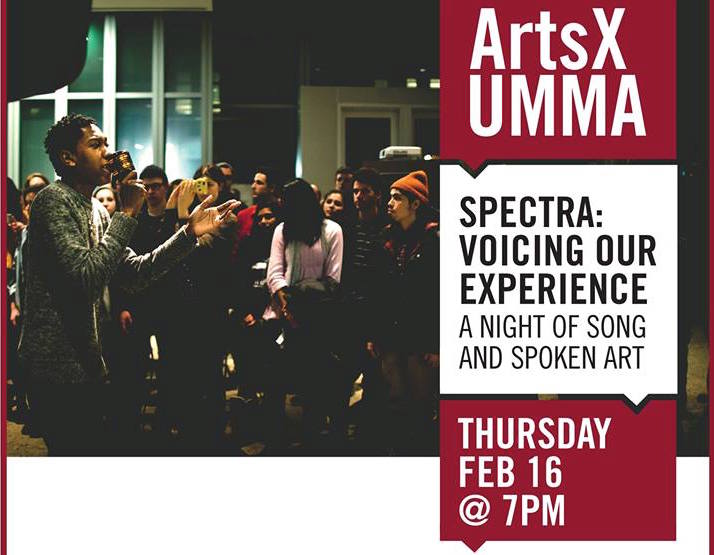
ArtsX UMMA will be putting on Spectra: Voicing Our Experience A Night of Spoken Art & Music, featuring a wide array of participating student groups and individuals performing music, poetry, and song. Giving voice to the students’ stories, this event aims to display the diversity of experiences through art forms. Performances hosted at UMMA situated in the middle of the gallery spaces always prove to be beautiful; the sound echoes off the walls, amplifying and reverberating back at the audience to immerse the senses. If an event hosted in UMMA’s Apse surrounded by art and performance can’t tempt you enough, perhaps the hot cocoa bar will.
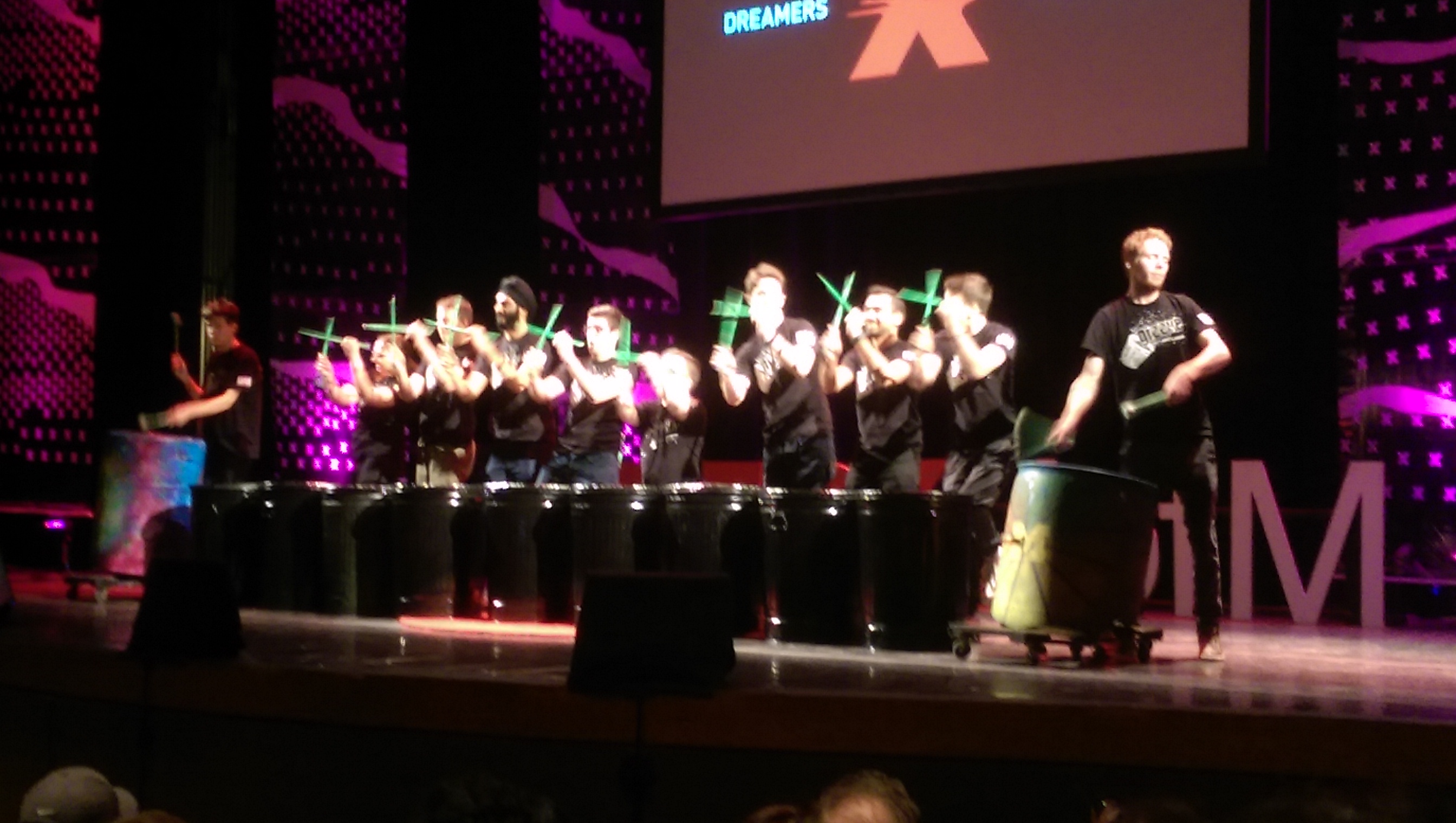
TEDx UofM 2017 was as busy as ever, adding to the disruption part of this year’s theme: Dreamer’s and Disruptors. The army of volunteers running the independent conference have by now created a finely-tuned machine with the perfect mix of emotional roller-coaster, thought-provoking ideas, and blissful entertainment.
The student group Groove = bliss
A student jazz band played in the minutes before the conference started. Their grooving, polished performance was a reminder that so many students at this university are talented and sound like professionals even before they’ve graduated.
Then the first speaker took the stage. Koen Vanmechelen came all the way from Belgium to talk about chickens. Specifically, about how breeding various species of chickens can be used to teach us important lessons about human nature.
Next was Sophia Brueckner, a brilliant woman who was a preeminent software engineer at Google until she suffered an injury that prevented her from using computers for two years. She argued that we as a society have developed a dichotomy of looking at technology as either a complete disaster, or as completely awesome. Instead, she asserted, we need to approach technology with critical optimism.
Ironically, Sophia Brueckner pointed out that making an app to solve all our problems is a fallacious idea, but the 2017 TEDx prize went to a student that developed an app called FoodFind. Meant for low income families to find free food, you have to wonder how many families can actually afford and use the smartphones that the app runs on.
Caitlin Holman proposed three things we need to learn: autonomy, competency, and belonging. Videogames, she suggested, provide all of this. With that in mind, she founded GradeCraft with the purpose of making learning more “gameful.”
Erika Newman–a pediatric surgeon–talked about both clinical and personal experiences with cancer. She was introduced to the lack of information on neuroblastoma when one of her patients asked her about the disease and she realized how she didn’t have any answers. The only surprise here was that she was having trouble getting funding from the NIH to treat the cancer using DNA repair mechanisms.
Rollie Tussing and the Midwest Territory Band played during the break. Although they were a stereotypical band you’d hear in Ann Arbor (at least one instance of well-manicured beard, a cello, and music reminiscent of vintage records), they were entertaining. Their sound was both stripped down and full, and antique without feeling archaic.
Next was Abdul El-Sayed, the current Executive Director of the Detroit Health
Department. In case that didn’t already tell you what a monumental task that entails, he cited several facts about the city of 600,000+ people such as a life expectancy of 70, an asthma rate of three times that of the rest of the country, and vision and other problems that far surpass the rest of Michigan. His argument was to think about pathophysiology in the social realm so that we can help people prevent health problems from developing. Abdul was also one of the best speakers of the night and I highly recommend watching his talk at least.
Next was Jeffrey Veidlinger, a historian who went to Eastern Europe to interview survivors of the Holocaust as a way of preserving their culture via understanding Yiddish. He challenged the audience to “Ask your loved ones about their life. Ask them about their dreams. Ask them about what they cherish.”
The most heart-wrenching talk of the night came from Scott Matzka, who was a talented athlete and is now a husband and father battling ALS. This is another talk to watch, and to check out his organization MyTurn.
Documentary filmmaker Sophia Kruz was the last speaker of the evening. Showing clips from her latest documentary Little Stones, she showed how sharing individual stories is important, as well as using culture to address problems in society.