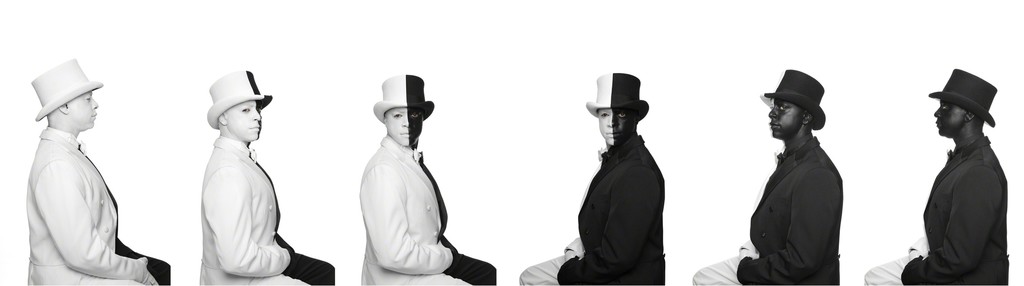
REVIEW: Stamps Speaker Series- Hank Willis Thomas

Prior to tonight’s lecture I knew little about Hank Willis Thomas aside from the fact I had seen and been particularly struck by one of his pieces in the Detroit Institute of Art.  I had no idea what a treat that night would be.

When Thomas walked out onto stage in a still brightly lit theater, phone clutched in hand, I’m sure many of us were unsure what to think. He said he then wanted us to start off the night with a collaborative project, to take a picture of a stranger or friend sitting nearby and post it on social media with the hashtag “#thetruthisIloveyou.”  You can find a smattering of these photos on his twitter account here.   This immediately set the tone for the overall optimistic and hopeful presentation, despite the dark subject matter.

Hank Willis Thomas and his Mother

After this brief activity, the lights were dimmed and Thomas started his presentation by introducing the audience to his mother, a talented photographer herself.  He told us about how his mother was once told by a college professor that she, as a woman, was taking up the space of a “good man.”  She carried those words with her for the rest of her life, but in spite of that professor, she has gone on to publish books well into the double digits and is currently a professor at NYU.

He then transitioned smoothly into talking about his own development as an artist.  Thomas said that he had not originally planned to become an artist, but rather fell into the role after his close cousin was murdered in 2000.  Finding himself lacking motivation and drive, Thomas eventually found his way into the artistic field.


An image from a sweater ad

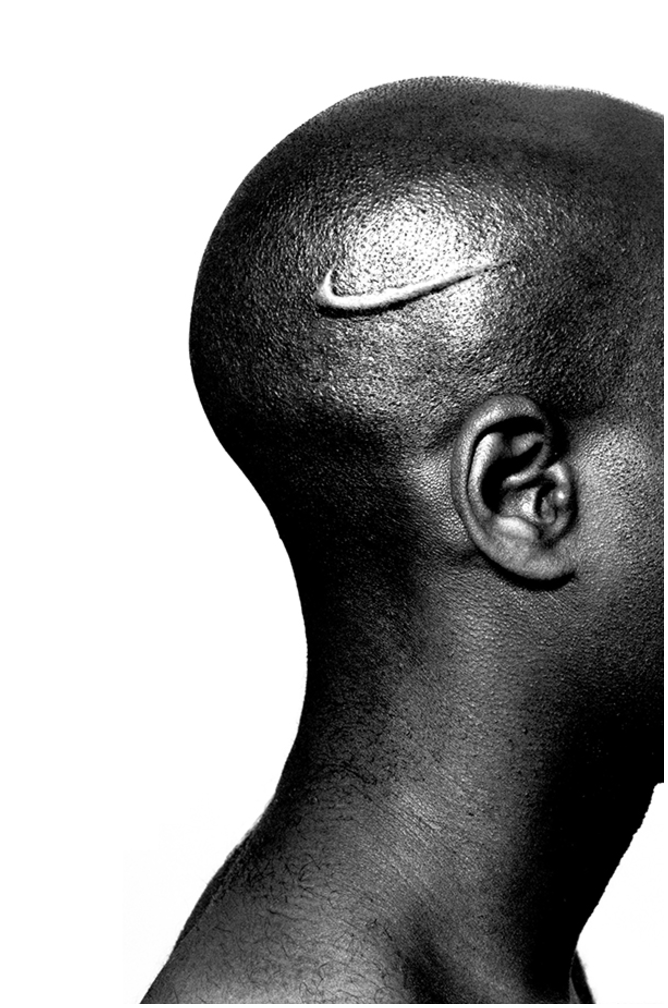
He then took us chronologically through the various pieces and series that he has done. He began to talk about his fascination with framing, and how the theme of frames showed up in many of his college works.  He also produced the B(r)anded Series in which he explored the African-American male body in relation to popular brands and advertisements.   He was particularly fascinated with taking advertisement and stripping away all of the words and identifying information to let the images speak for themselves.  He showed us the various depictions of women throughout the last century, first showing the image and then making his audience guess what the ad was actually for.  It was an eye-opening and sometimes chilling experience.


He then talked about this idea of reformatting images and advertisements so that they can be viewed in a new way.   He would find photos that particularly resonated with him, often of apartheid South Africa, and then find a different way to frame those events, often through cast sculptures where only parts of the original photograph will be shown, leaving the viewer to fill in the rest of the information.


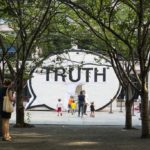
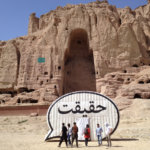
Lastly, he finished up the speech by showing some of the video recording from people across the globe for the  “The Truth Is” traveling project.  This project involved a recording booth shaped like a giant speech bubble that simply says “truth” that was then placed in high traffic areas. Civilians were invited into the booth to record a short video telling what they believed “the truth is.”  One of the most touching and heart wrenching videos, especially because of the recent developments in the news, was of a little boy not even 8 years old who wanted to share the truth that Muslims, like him and his family, were good, peaceful people.
One of the most inspiring things about his presentation, was how captivating of a speaker Thomas managed to be.  He managed to be calm and yet passionate at the same time, providing a wonderful and entertaining balance that still remained informative.

When Thomas finally walked off the stage, there were whoops and cheers scattered among the fervent applause, making this the warmest and most enthusiastic sendoff of any speaker I’ve seen here yet. True to this reception, the Q&A session was the most well attended that I had seen so far, while still remaining fairly small and intimate in the Michigan Theater’s annex. Thomas got to answer questions ranging from his work, to his history as an artist, to his political views.

You can find out more information about Hank Willis Thomas at his website. The STAMPS speaker series is free to the public and is offered every Thursday at 5:10 at the Michigan Theater.  You can find a full list of the upcoming speakers here. 
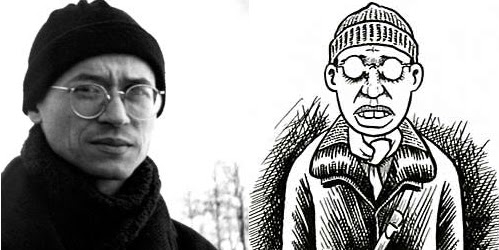
Photo Sources- 1, 2, 3, 4, 5


REVIEW: Stamps Speaker Series- Joe Sacco

I had heard rumblings that the night’s guest would draw a larger crowd than usual but I wasn’t prepared for how large the crowd might be.  As we filed into the theater from the packed lobby area, it was difficult to find an ideal seating spot. This presentation was co-presented with the University of Michigan International Institute’s Conflict and Peace initiative, and the official Stamps website contains a full list of the sponsors for the night.

Tonight’s event was not a formal speech, but more of an open discussion between the guest Joe Sacco and a host from the International Institute’s Conflict and Peace Initiative.  As the discussion proceeded different images of Sacco’s work were projected onto the screen behind them, and while switching from photo to photo could be highly distracting it was a nice visual supplement to the presentation, and often was used as a conversation point.

Joe Sacco, as we gradually came to know throughout the course of the talk, had originally received a degree in journalism at the University of Oregon, before finding that creating comics was both a way to indulge in his passion for art and to reach a wider audience that are put off by long history books and dense articles.  He approaches his subject matter in the same way a war correspondent might.  He traveled the world, and his very first comic, Palestine, was directly based off of his personal travels through Israel and the West Bank.  Some of his award-winning works include Footnotes in Gaza, Days of Destruction, Days of Revolt and Safe Area Gorazde.  He is highly regarded by comic lovers and news junkies alike for his careful research and thoughtful approach to delicate and politically charged subjects.

When asked what inspired his work and the topics he chooses to work on, Joe Sacco responded quite succinctly that anger above all else was the driving force behind his comics.  He looked for topics that created a sense of frustration or injustice in him, and just as importantly ones that he would maintain a passion for the many years that it takes to finish a single piece.  He also discussed his dislike of the word “graphic novels,” because of how his works are not novels despite fitting under that subcategory.  He admits, however, that the word is here to stay and will use it himself when describing his occupation to others.

One of the very first panels from “The Great Wall”

One piece that was discussed quite thoroughly was Sacco’s 24-foot-long graphic tableau “The Great War.”  Sacco spoke briefly about how fascinated he was with World War I while growing up in Australia, where that war takes up a large part of their cultural identity.  His inspiration for this specific piece was The Bayeux Tapestry, and he wanted to create a similar narrative scroll that told a story when read from left to right.

middle segment of “The Great War”

As an artist, I also found the discussion of the artistic styles to be quite interesting.  Sacco talked briefly about his upcoming project and how he will be turning traditional comic styles on their head in order to better convey the meaning and message that he wants to.  He’s working on a project about the indigenous peoples of Canada, and as such is experimenting with creating comics with no borders and an aesthetic style that focuses heavily on nature and natural forms.  He believes this will better fit the ideology and tone of the work itself, as the groups he will be focusing on have a specific way of thinking about nature.

Panel from his book “Days of Destruction, Days of Revolt”

As the crowds streamed out of the theater and into the brisk night air, we were once again greeted with live music.  A long line of people waiting for autographs trailed up the staircase to the second balcony, further proving the popularity of tonight’s speaker.

If you would like to check out more of Joe Sacco’s work you can purchase many of his books from amazon here.  The STAMPS speaker series is free to the public and is free to the public and is offered every Thursday at 5:10 at the Michigan Theater.  You can find a full list of the upcoming speakers here.


pictures from- 1, 2, 3 


Review: University Symphony Orchestra Concert

It was a wonderful concert. It goes without saying that the University Symphony Orchestra performed beautifully last night, and I loved both sets of music. They began with Mozart’s “Jupiter” symphony, and the first thing I noticed was that when they began playing, the bows of the violin section all moved in unison. I don’t think I’ve often seen movements so crisp, which is a symbol of the orchestra’s caliber. I heard the same thing when in the same movement there occurred a series of grace notes, which due to their rapidity can be easy to miss or blur. Instead, the unity I heard was stellar. I’ve heard much of Mozart’s work, but “Jupiter” was something entirely different. In most of his other work I find a certain delicacy in his melodies, even in his more intense pieces. While that’s still true here, the balance in “Jupiter” is definitely tipped towards grandeur and not daintiness.

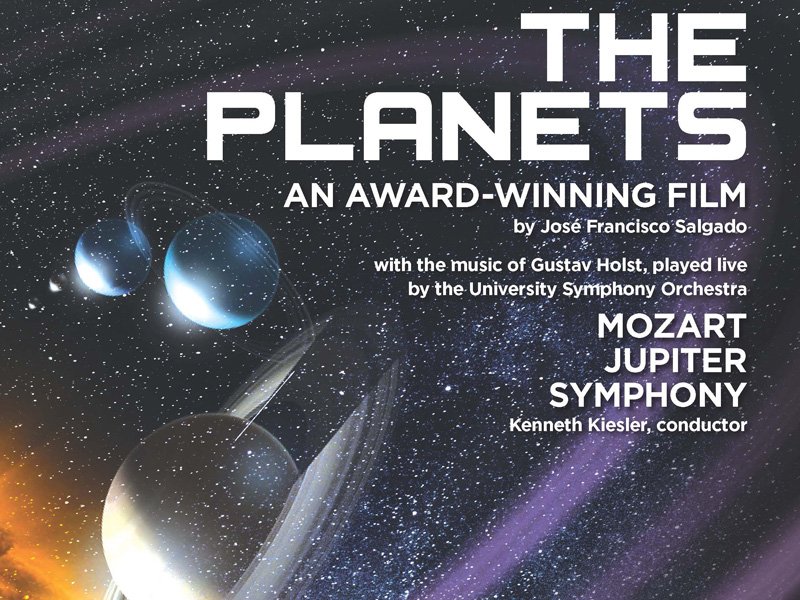
After the intermission, they played Holst’s “The Planets”. It was a fantastic performance. I’ve never heard such overwhelmingly powerful music before. Nor have I seen such instrumentation (this was the first time, I think, that I recall seeing an alto flute played in concert, and that wasn’t the only unusual instrument there). This was the highlight of the programme, as the entire suite has been set to a visual accompaniment by José Francisco Salgado, a UM alum, who came onstage to introduce the piece. The visuals were a montage of photographs, renderings, and videos, set to move as one with the music. I was not quite sure what to think of the film. Sometimes it seemed like just a montage of images, which I realize is a result of our limited capability to document these planets. I thought Mars was the most polished piece, and I believe that’s because there was more of a thread to follow there. We’ve also done the most research on Mars and therefore have plenty of videos and time-lapse imagery, which Salgado was able to time wonderfully with the music. On the other hand, the other movements were mostly photographs and artists’ renderings. The “Neptune” movement contained, I thought, less footage of Neptune than it did of the stars, which, while intentional and beautiful, eclipsed Neptune.

I also had some difficulty identifying the scientific concepts that Salgado intended to convey through the film. I wish I had been able to attend the panel discussion beforehand, because I think they would have discussed the science present in the footage and given me some things to look for. However, the programme made a close substitute, because for both “Jupiter” and “The Planets” there were detailed musical descriptions of each movement. I really appreciated the historical and musical context they provided. That said, I’m glad the film was there as an accompaniment. The film added color, which was valuable because, thanks to photography and digital renderings, we’ve always seen astronomical pictures in bright colors. Furthermore, the timing was done very well, which, in a musical piece, is an essential element. This combined with the forceful nature of Holst’s music made the entire thing simply awe-inspiring.

Preview: University Symphony Orchestra Concert

The University Symphony Orchestra, UM’s most selective orchestra, is playing Holst’s “The Planets” and Mozart’s “Jupiter” tonight. I’m a fan of both Holst and Mozart, so I’m excited to go hear their work live in concert for what I think is the first time. I am also intrigued by the fact that this performance will be accompanied by a film made by José Francisco Salgado, an Emmy-nominated artist who explores the connections between art and science in his work. I have never attended a concert with a visual accompaniment before, so I can’t wait to see how the two parts complement each other. I also like the intersection of art and science myself, so I’ll be interested to see what scientific connections and principles make their way into the performance.

The concert is tonight (January 25, 2017), in Hill Auditorium at 8pm. Attendance is free. There will also be a panel discussion with Salgado at 7pm in the lower lobby.

REVIEW: The Ark Open Stage (Open Mic)

The only way to go to an open mic is to go open-minded. What I immediately liked about the Ark was that it had a much more open atmosphere than more traditional open mic venues like coffee shops.

open-stage-1
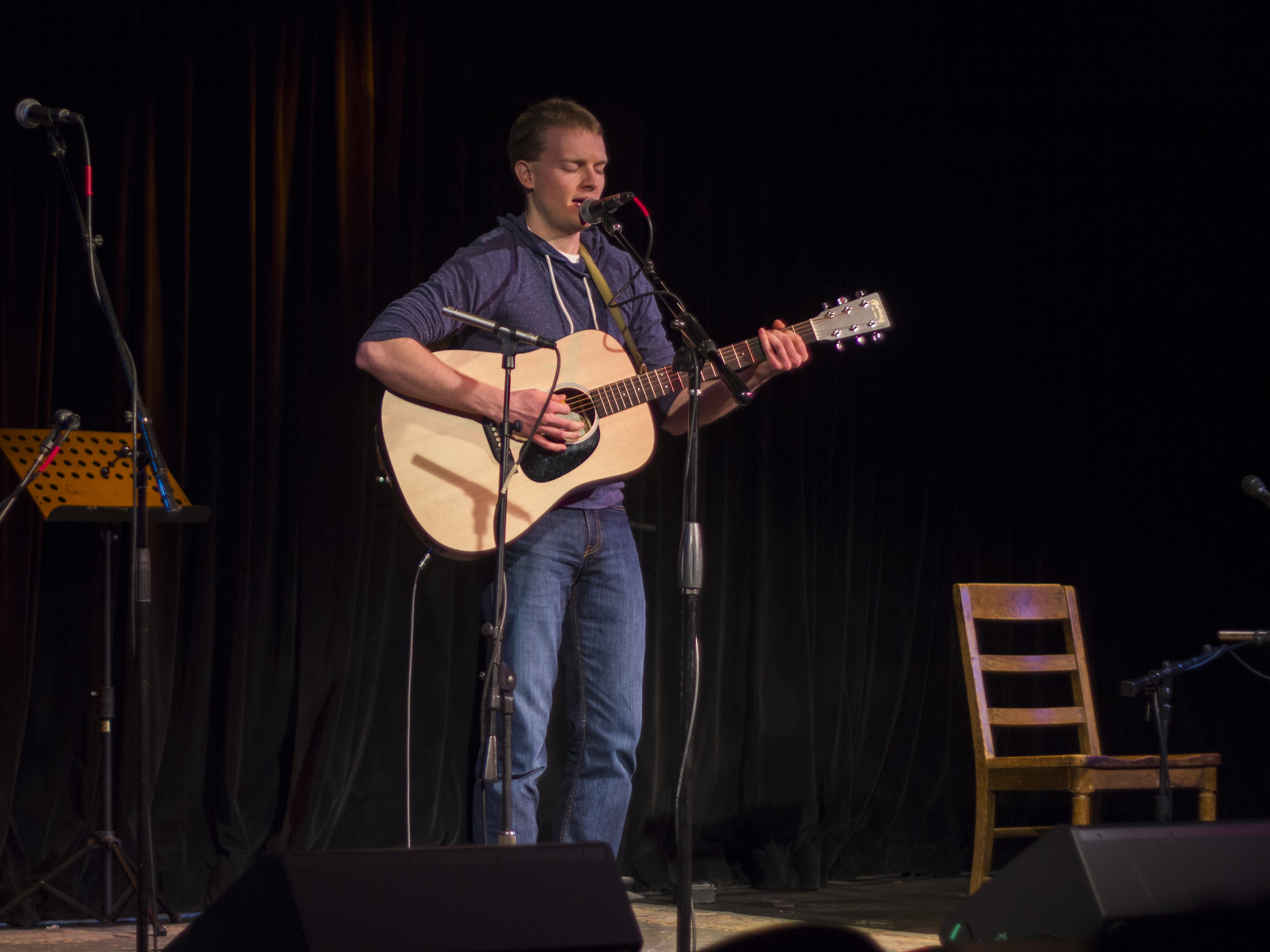
Bradley playing “Strange”

The emcee for the night drew 15 names out of a star-covered bucket and the first performer, Bradley, came to the stage. Dressed like any other run-of-the-mill Ann Arbor hipster, he explained that he hadn’t expected to play. Then he belted out two incredibly well-crafted songs on guitar, harmonica, and piano that sounded polished enough to be heard on the radio.

Not everyone who came to the stage was polished, but they didn’t have to be. A guitarist named Max belted out his original “Snow in July” that sounded great as a raw, unfinished sound.

One of the pairs of the night, Remington Taylor, performed using only the piano as an accompaniment to their voices, and they were magnetic. Their songs of heartbreak and romance was in the vein of Once and Begin Again, but without an acoustic guitar.

Which brings me to the caveat about this event: come expecting to hear a lot of acoustic guitar and heartbreaking ballads. One song was title “Heart Shattered Like My Bones”–about a boy of course. The girl who announced did so with a “haha it’s dramatic I know I didn’t really mean it–but seriously that’s how I felt” vibe.

Even though each performer only had eight minutes, seeing and hearing acoustic pieces again and again started to sound a bit repetitive.


open-stage-2Then a young strapping lad named Kellen Marceau took the stage and sang his original pieces “Your Boyfriend” and “What if We Broke Up and Zombies Came.” Think Zooey Deschanel writing a break up song except weirder–and funnier.

Overall, open stage is not a bad way to spend your night, especially when it’s raining outside and the cost of admission is only $2. If you’re going though, I recommend that you don’t play acoustic guitar.


PREVIEW: The Ark Open Stage (Open Mic)

Have you been honing those keytar skills throughout winter break and want to show off? Want to show off the results of all that practice singing to yourself in the car on your morning commute?

This is your chance!

On Wednesday, January 11th at 8 PM, 15 performers will be invited to the stage at the Ark for 8 minute performances each.

Sign up: 7:30

Selection: 7:45 and 8:30

It’s only $2 for students!

As the Ark states on its web site, locally famous acts such as Dick Siegel to nationally known artists like Gilda Rader have performed at open stage.