Yo-Yo Ma is one of the most famous classical musicians of all time and is probably the most famous cellist. He is internationally renowned and has won 18 grammys. You’ve definitely heard his name before, but now you can also hear him speak! He is coming to give a talk at Michigan about his career and belief in the power of culture to generate trust and understanding. Using examples from his life he will talk about the role of culture in shaping our future.
I know talks can be boring, and it’s a little deterring that there is a price tag to this event with no reception following, but seeing Yo-Yo Ma is a once in a lifetime opportunity. This guy was awarded the National Medal of Arts and was a recipient of the Presidential Medal of Freedom. I am also secretly hoping that he will also have a cello on him, and play some music for everyone to hear.
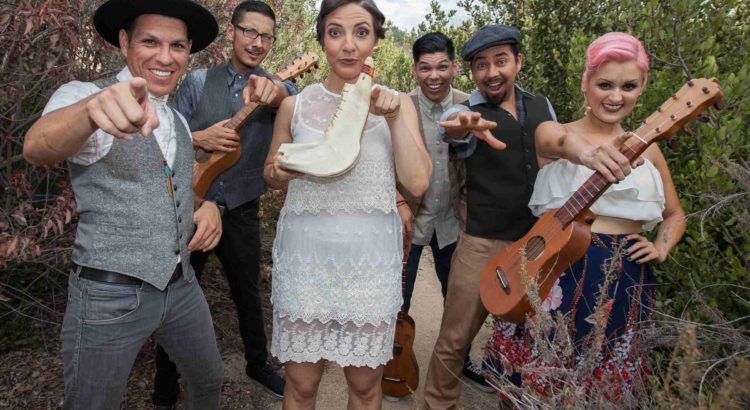
This group boldly marched on the Michigan Theater stage yelling and rallying everyone in the audience to start standing, clapping and dancing. They did this while strumming a tune on their jarna jarocha’s (an instrument that looks like a blend between a guitar and a ukelele). I stayed sitting because I prefer when bands run on and immediately start playing great music that ignites everyone to naturally stand, or after proving their worth rally everyone to stand up. However, my bad mood quickly changed when the music started playing because it was very fun and upbeat music. Music that would be very hard to be upset while listening too.
This concert had a lot of ups and downs for me. Which I will explain in the following paragraphs.
I enjoyed the lead male singer’s voice. It was harsh, nasally, and whiney, but all in a good way. It was very unique and could be the voice of a TV shows opening song. He also acted as the hype man of the group. After seeing a couple of latino shows this year, I realize that it is custom for the audience to break out into big applause and start hollering when the singer yells a phrase they like. He did a good job at this role I assume because even though I don’t understand Spanish, he got the people sitting behind me very exuberant.
I was not a big fan of the lead females singers voice, but only in the context of the music. She has a very beautiful voice, it is airy, fragile, and soft, which is great, but didn’t fit the style of the music well and didn’t sound good when harmonizing with the other singers. I even had trouble hearing her sometimes. Granted there were songs, always the slower and stiller ones, where her voice sounded beautiful. These were actually by far my favorite songs of the night.
There were some good songs. Whenever the lead female singer was singing a song with the lyrics “I Love You”, which mentioned above also happened to be the slower songs, it was very pleasant and beautiful. They played an Afro-mexican song that had great instrumentals. My personal favorite song had a Spanish name that translated to “The Most Beautiful Ugly Person” or “Long Live the Ugly”. My favorite musician of the night was the lead jarana player. He had the ability to play extremely fast, and was the only one who offered some instrumental variety. My favorite scene was when the lead singer started tap dancing to one of the songs while simultaneously showing the lyrics in sign language to the audience.
Most of the songs sounded like they had the exact same tune, background, and beat. It was like I was listening to one song for most of the night which got a little boring. I also did not enjoy the rapping, which dominated the second half of the performance. I thought it sounded childish with the tuney music in the background, and none of the English lyrics were very clever, it was all pretty cliche. It felt like the whole thing was a freestyle they came up with on the spot (to their credit some of it was).
As both an up and down for me, the group was very political. They talked/sang about migration, healthcare for all, Trayvon Martin and other victims of racism and police brutality, environmental issues, and our current presidency. It was mainly just generic chanter, which I didn’t care to hear unless it directly related to a song. I did really enjoy one line that was said: “We got to get organized, how can we get organized if we can’t dance together”.
This Friday I will be going to the multimedia exhibition Stories Never Told: Yemen’s Crises & Renaissance. This exhibit will be making its second stop in Ann Arbor with its first being at the Arab American National Museum in Dearborn Thursday evening. After this pilot, the exhibit will hit the road traveling to other parts of Michigan, the United States, and further. The exhibit is a mix of various mediums of art including visual, film, poetry, writings, and more centering around the Yemeni Crisis through the eyes of Yemeni citizens and the Yemeni diaspora. Stories Never Told is put together by Hanan Ali Yahya, a Yemeni-American social entrepreneur. Yemen has undergone a long and terrible conflict resulting in widespread famine and a refugee crisis. This conflict and the suffering of the Yemeni people has gone unnoticed by much of the international community despite international involvement such as Saudi Arabia bombing civilians with U.S. weaponry. Through this exhibit, the Yemeni community and diaspora are able to express their experiences with art and the written word and gain a voice in the communities that it reaches.
Image courtesy of the Global Islamic Studies Center.
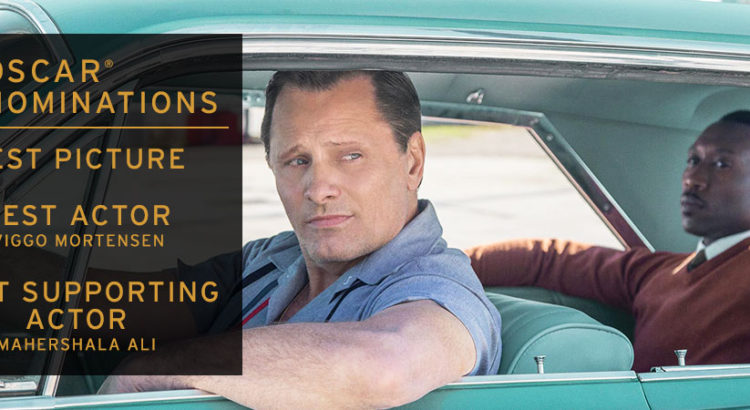
Green Book was a good movie. I laughed multiple times, felt emotionally connected with the characters, and left feeling uplifted. However, Green Book was a film made for the early 2010s that just cannot find its place in 2019. I went into the theater on a Tuesday night after Green Book has been showing at the State for over three months expecting to have the place to myself, but it was almost full. People are still flocking to see this movie and it is a strong contester in several fields for the Oscar’s coming up this weekend. So what do I have against this well-loved film?
After conversations over the past few years have sprung up about representation of minorities on the big screen we have seen more movies with minority casts and those movies are being better represented by the top awards shows. Three of the movies nominated for best picture at the Oscar’s focus largely on Black characters and issues (Green Book, BlackkKlansmen, and Black Panther) which is surely a move in the right direction. However, Green Book is the least progressive of these three films. What makes BlackkKlansmen and Black Panther such important, compelling films is their feature of Black main characters, focusing on empowering tales, made by Black directors and screenwriters. These are all the ways in which Green Book is lacking. In Green Book the main character is a white man (hence Viggo Mortenson’s nomination for best actor and Mahershala Ali’s nomination for best supporting actor), the Black character is used as a vessel to humanize the main, white character, and the film was both directed and written by, you got it, more white men. Green Book is not about sharing the story of a fantastic, highly-educated, queer, Black, virtuoso pianist who fought the barriers of his time; Green Book is about another white man from the 1960’s and how he moved past his biases. To make things worse, Dr. Don Shirley’s family have come out saying that Green Book falsely represents his life and the nature of his relationship with his driver. The movie makes Tony Vallelonga into a hero, playing into the white audience’s white savior complex and their desire to feel a bit less problematic in today’s world.
The film industry will not make progress toward being a more inclusive and representative space until it learns that representation means much more than the presence of minorities; representation means featuring minorities as complex, main characters in stories told by their peers. When we see more of these films represented in the top awards shows the academy can finally say that they are truly representing the American audience in a way that is not tokenizing. The Oscar’s should be recognizing the amazing films that are paving the way for American cinema. If Beale Street Could Talk is a perfect example of a gorgeous film that features an almost entirely Black cast, is based on a book written by a Black man, was directed and adapted for the screen by a Black man, and represents race relations of the 1960’s in a nuanced way. Another film that was snubbed by the Oscar’s this year is Sorry to Bother You. This movie was unique and compelling, quickly formed a cult following, and easily should have earned a nomination for best original screenplay.
While I enjoyed Green Book, I simply cannot say it was a great or progressive film and I will be highly disappointed if it wins best picture at the Oscar’s this Sunday. The American audience is ready for good movies that empower minorities, we saw that when Black Panther shredded box office records last spring. Now, it is Hollywood’s job to make sure we get movies that can stand up to that legacy. Personally, I would love to see a movie that showed Dr. Shirley’s path to becoming a world-renowned pianist and delved into the complex nature of being a queer black man in 1960’s.
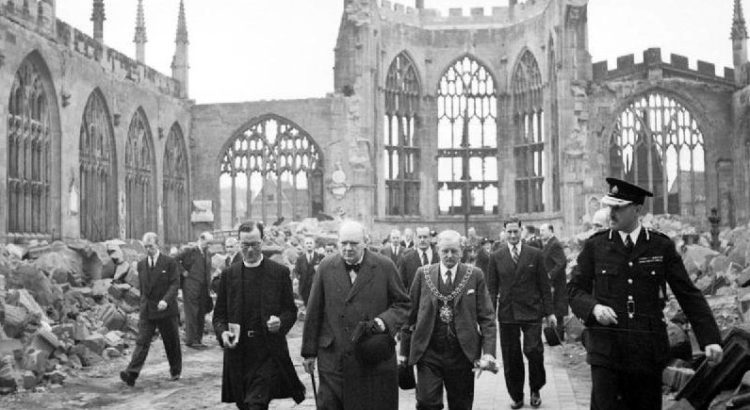
Commissioned by the Coventry Cathedral Festival for the 1962 re-consecration of the Coventry Cathedral, which was destroyed by Nazi bombings during World War II, Benjamin Britten’s War Requiem is a truly haunting piece. Undoubtedly his masterpiece, it combines the Latin liturgy of the Mass for the Dead, sung by soprano and the chorus, and children’s chorus, with the English language war poems of Wilfred Owen, sung by tenor and baritone. The piece was performed this past Saturday by the Ann Arbor Symphony, UMS Choral Union, and Ann Arbor Youth Choral, under the baton of Mr. Scott Hanoian.
The work is chilling from the beginning, and it opens with the tolling of chimes and the chorus quietly chanting “Requiem.” The music is simultaneously very much in the 20th-century style, while also clearly drawing from and referencing much earlier works, and it similarly blends modern poetry with centuries-old liturgy. In some ways, this parallels the old and new cathedrals – the old cathedral was built in the 14th and 15th centuries, and the decision to rebuild it was made the morning after its destruction at the hands of the Luftwaffe.
Shortly after the destruction, the cathedral stonemason, Jock Forbes, noticed that two of the charred medieval roof timbers had fallen in the shape of a cross. He set them up in the ruins where they were later placed on an altar of rubble with the moving words ‘Father Forgive’ inscribed on the Sanctuary wall. Another cross was fashioned from three medieval nails by local priest, the Revd Arthur Wales. The Cross of Nails has become the symbol of Coventry’s ministry of reconciliation.
Her Majesty the Queen laid the foundation stone on 23 March 1956 and the building was consecrated on 25 May 1962, in her presence. The ruins remain hallowed ground and together the two create one living Cathedral.
The Ann Arbor Youth Chorale, which sang the part of the children’s chorus, was seated in the balcony, which was a decision that I thought added to the drama of the piece. The Youth Chorale only sings four times in entire eighty-minute work, and because I couldn’t see them from my seat, their entrances were (almost, if it were not for the translations in the program) unexpected. Furthermore, their position above and away from the rest of the performers and the audience gave a feeling of otherworldliness and innocence.
Also strategically positioned on stage was Ms. Tatiana Pavlovskaya, soprano. Rather than being at the front of the stage with Mr. Anthony Dean Griffey, tenor, and Mr. Stephen Powell, baritone, Ms. Pavlovskaya stood in the midst of the orchestra. I think that this probably enhanced the blend between her exquisite voice and the orchestra, and it also was a fascinating artistic decision – in her black gown, she faded into the background of the orchestra, rather than stand out as a soloist.
The cathedral today, old alongside new.
I did appreciate that the words of all parts, as well as the translations of the Latin liturgy, were included in the program so that the audience could follow along for the duration of the work. Simple efforts such as this greatly increase the piece’s accessibility, since most audience members are not fluent in Latin, and sometimes even the words of English pieces are sung too quickly to digest.
At the conclusion of Benjamin Britten’s War Requiem, the audience sat in weighted silence for a lengthy period, which I think is a testament to the piece’s lasting impact.
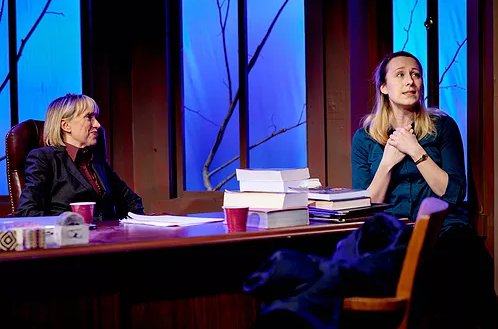
Theatre Nova’s latest show, The How and the Why, is another play with its roots in science. I’ve seen two similar ones over the last year, and I’ve been favorably impressed by both. One of those, incidentally, was the last show of Theatre Nova’s I saw, Constellations, which was beautifully done and makes me incredibly excited to see another of their shows. The How and the Why is about evolutionary biology – my favorite scientific subject to read and learn about – and has as its main characters a mother and daughter who are both renowned evolutionary biologists. Add to this the fact that the daughter proposes a new theory of female sexuality, and this play might just be everything I’m looking for in a literary work.
The How and the Why runs through February 24. Tickets are $22 each (or if you have a financial limitation, pay-what-you-need tickets are available at the door). More information about Theatre Nova and the play can be found here.