PREVIEW: Violet

The University of Michigan’s School of Music, Theatre, and Dance is bringing the breathtaking musical Violet to the stage this weekend!  Violet is a beautiful story about the journey to healing for a young woman whose face was disfigured in an accident.  It’s a relatable tale of friendships, hardships, and finding beauty and hope in difficult situations.

On her journey from North Carolina to Oklahoma, Violet meets Monty and Flick, two soldiers heading to Arkansas.  Throughout the musical there are some of the most beautiful musical numbers that help tie the story together.  When Violet finally makes it to Oklahoma, she meets the preacher that she hopes will heal her disfigured face.  Will she return home healed by the preacher, or as the same person as before?

Violet will be performed at the Arthur Miller Theatre on Thursday 12/7 at 7:30pm, Friday 12/8 at 8pm, Saturday 12/9 at 2pm and 8pm, and Sunday 12/10 at 2pm.  Tickets are $20 for General Admission and $12 for Students with a valid ID.

More information can be found at: http://tickets.smtd.umich.edu/single/EventDetail.aspx?p=3355

REVIEW: Howie Day

Watching Howie Day perform was like a little kid watching a magic show.

During the climax of his opening number, “Sorry So Sorry,” he stopped playing his guitar altogether. But the music still resonated throughout the room, a full, sonorous sound that sounded like it could not possibly have come from one instrument. Was he using prerecorded music in his show? That seemed antithetical to not only what I had heard about Day’s live shows but to the venue itself, a place dedicated to stripped-down acoustic performances.

It took a few songs before I realized what he was doing. He would play a simple melody, sing a refrain, and tap out beats on the base of his guitar. He recorded it all, then layered the sounds together as he was performing to create a backing track of sorts. His flawless looping, the way he developed harmonies there on the spot using only his voice and his guitar, had to be seen to be believed.

Even after the show ended, “Sorry So Sorry” stuck with me. It was more than just the layering and looping. Day’s performance of the song was incredibly emotional and raw, something a lot of live performances lack. He took a page from the musical theatre playbook when he hit a high note with precision, then held it for several beats and let his vibrato take over. He then utilized the reverb pedal so that the sound echoed throughout the room, a move that was especially powerful in such a small venue.

Day also showcased his creativity and adaptability when unexpected trouble struck. In the middle of a performance of “Disco,” a string on his guitar broke. Because he didn’t have a backing band or a stage crew, he had to go backstage and fix it himself. When it became clear that he couldn’t finish the song, he tapped out a rhythm on his guitar and sang a small refrain from the song, then put it on repeat for the audience while he went tended to his instrument. He came back and finished the song to raucous applause.

Unlike many artists I’ve seen at The Ark, Day did very little talking in between numbers, opting to instead let the music speak for itself. He did, however, utilize musical interludes where he would layer sound upon sound, sometimes incorporating whistling or even his own whispers for a greater effect. Those interludes were as breathtaking as they were unexpected — most do not appear on his albums, and his appearance as “white man with acoustic guitar” doesn’t invoke images of innovative instrumentation.

The unexpectedness of Day’s set was part of what made it more magical. He combined the best parts of an arena concert — epic instrumentals and a sense of getting lost in the moment — with the intimacy and emotion of a small venue.

Day saved his biggest hit, “Collide,” for his final encore, opting for a more stripped-down arrangement of the song that made him famous. In holding off on “Collide,” Day was able to show the audience all he could do, then allow them to sit back and enjoy a song they already knew and loved, the cherry on top of a night I won’t be forgetting any time soon.


PREVIEW: What Were You Wearing?


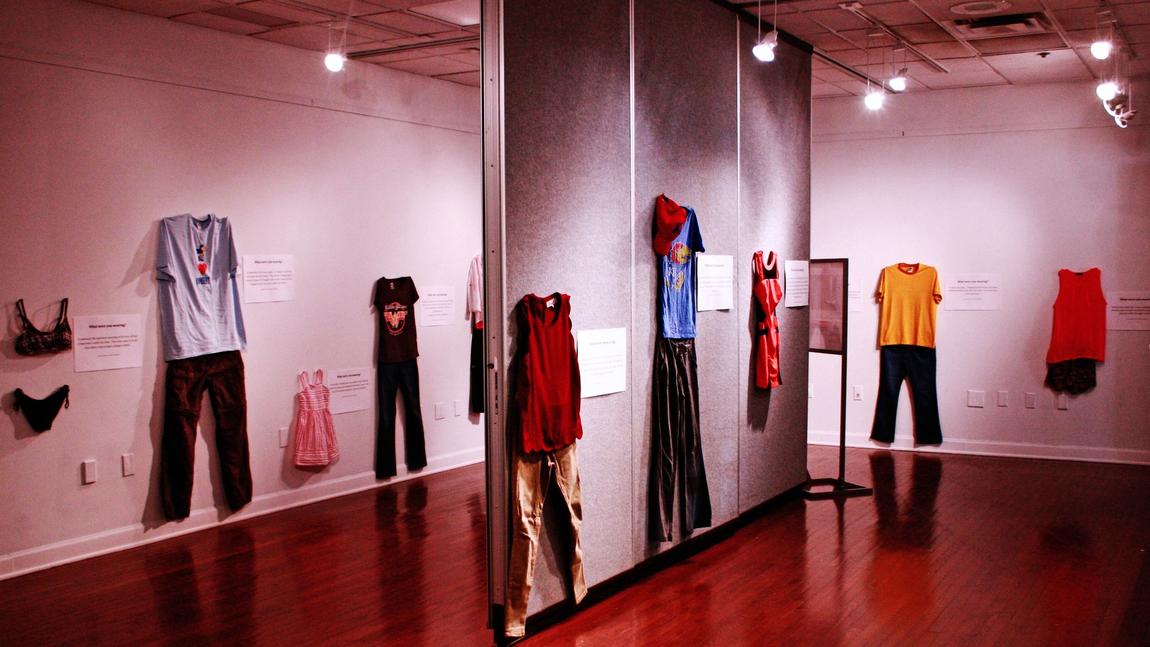
Displayed previously at the University of Kansas, this thought-provoking exhibit is stopping here at the University for just one day, so be sure to check it out.  Featuring 18 stories of sexual assault , the exhibit hopes to challenge victim blaming and the idea that sexual assault survivors are ever to be held responsible for the crimes of others.   This event was organized by HeforShe and should be an important step in promoting both reflection and conversation here on campus.


This exhibit will be housed in the commons of the UMMA this coming Monday, Dec 4th, from 5:30-8:30. The exhibit is FREE to all and there will be desserts and refreshments provided by zingermans so be sure to stop by and check it out!  


REVIEW: ALTERNATE ENDINGS, RADICAL BEGINNINGS

“In the ’80s we were talking about gay people, but we were talking about White gay people.”

This line from the documentary short DiAna’s Hair Ego REMIX (dir. Cheryl Dunye and Ellen Spiro, 2017) encapsulates the mission of last Friday’s World AIDS Day event at the University of Michigan Museum of Art. UMMA was one of hundreds of museums nationwide presenting ALTERNATE ENDINGS, RADICAL BEGINNINGS, a program of seven video artworks curated by Visual AIDS, an arts nonprofit now entering its 30th year of supporting HIV+ artists.

Featured films ranged from traditional narrative and documentary shorts to experimental video artworks. The event centered Black experiences of HIV/AIDS and queer and trans life through its directors’ intimate projects.

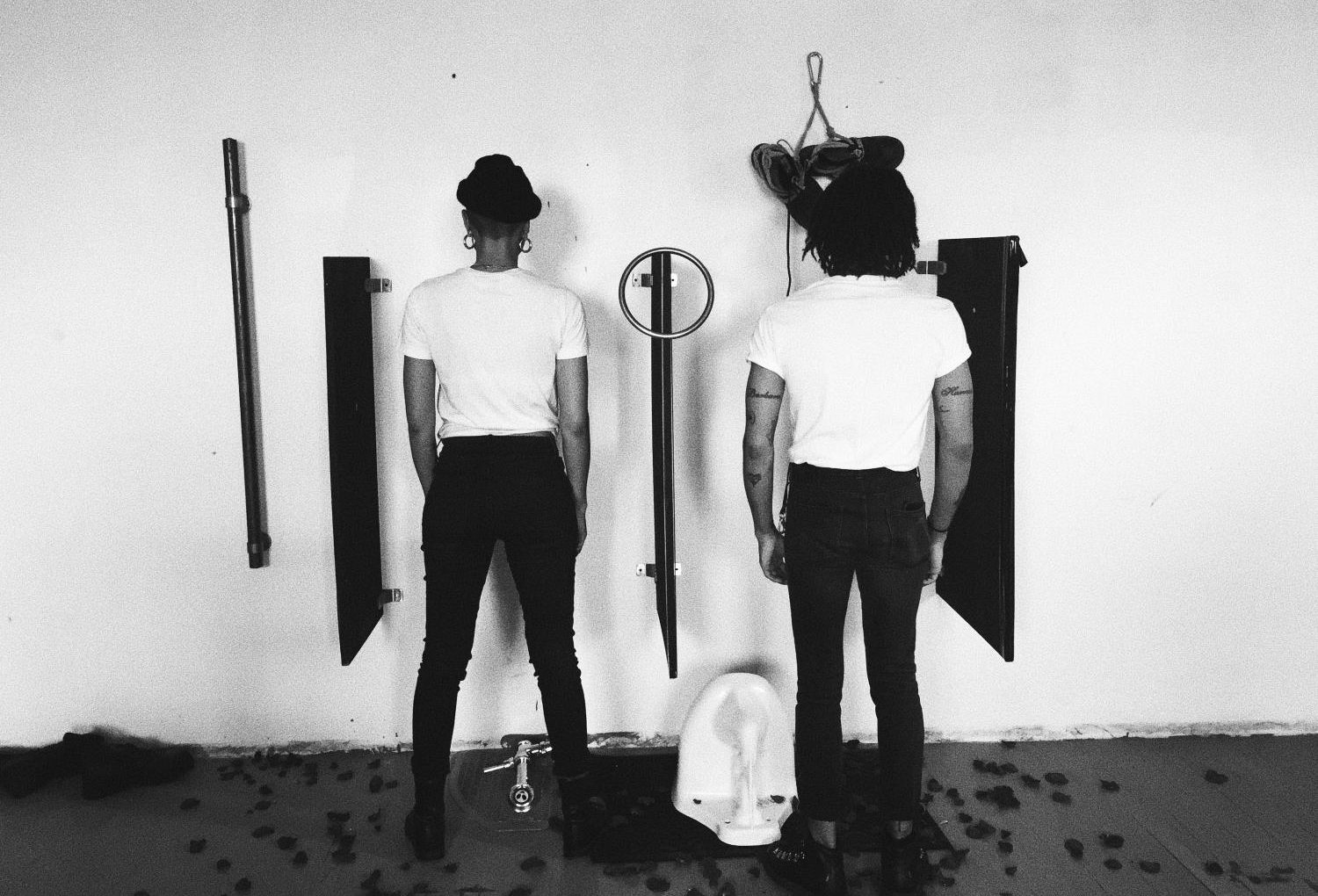
Two films from the event stood out in particular for their aesthetic distinctiveness. Atlantic is a Sea of Bones (dir. Reina Gossett, 2017) envelops its audience in swirling soapy water and colored lights as a drag queen reflects on her past from atop the Whitney Museum balcony. The short ruminates on Black queerness and its history (particularly in New York City), much like The Labyrinth 1.0 (dir. Tiona Nekkia McClodden, 2017), which uses assorted 16mm same-sex pornographic footage shot in bathrooms during the ’70s.

Featured together, these seven films screened at UMMA help reimagine what it means to be Black and living with HIV/AIDS today.

PREVIEW: Accidental Photographer: Seoul 1969

Stationed in Seoul as a member of the Peace Corps in 1969, U-M alumna Dr. Margaret Condon Taylor was a witness to monumental shifts in South Korean society. Accidental Photographer: Seoul 1969 opens at the Institute for the Humanities this week, and presents her color snapshots of the city for the first time in nearly 50 years.


On view December 7th – Jan 12th at the Institute for Humanities Osterman Common Room (202 S. Thayer St).

Opening reception, lecture by Assistant Professor Se-Mi Oh (Asian Languages & Cultures), and Q&A with Dr. Taylor on December 8th from 12-1 PM.

Presented by the Institute for Humanities and the Nam Center for Korean Studies. Curated by Associate Professor Youngju Ryu (Asian Languages and Cultures) and Professor David Chung (Penny W. Stamps School of Art & Design).

REVIEW: RC Players’ Proof

Walking into the Keen Theater for RC Players’ Proof  (a play by David Auburn) this past weekend, the first impression I got of the play was from the set. Resting center, it took up the width of the stage, connected by hinges and locks that create a fold out living room. It was a living room with discarded papers and pizza boxes scattered across surfaces and the floor; a sight I couldn’t say was unfamiliar to me as I looked back on my four years of college and thought of the leaning stacks of papers and folders that at that moment were sitting on my desk at home.

In reading the Director’s Note in the program, the directors’, Emma McGlashen and Sophia Kaufman, closing remarks were forefront in my mind as the show started: “The language regarding mental illness in the play is casual and the characters’ conversations are not overly concerned with being appropriate or sensitive. We have worked to ensure that these moments reflect the characters’ pain, rather than a flippancy we do not share”.  

This seemed a well crafted statement that deserved acknowledgement in a play that deals with difficult issues of mental illness, grief, family, and genius. And I think their efforts were put to good use- their interpretation allowed audiences to see a family grappling with elements outside their control in whatever ways they could find to articulate them.

Evan Stuber, Technical Director changing set during intermission

Given that, the play was surprising humorous. This was due in large part to the dynamic and sarcastic attitude of the lead Catherine, played by Nicole Banchik. She was convincing and engaging presence- whether she was playing opposite her father, her possible love interest, or her sister. The second half of the play, after an intermission in which we got to witness the set transform and unhinge from a living room into an outdoor courtyard, we saw tensions rise between all characters. The chemistry between Catherine and her father, played by Cameron Flynn, was somehow deepened in the second half- I believe through a combination of the written flashbacks and the greater amount of stage time that allowed Flynn to add distinct elements to his character such as the crossed arms or the exasperated hand gestures of an elder man.

Overall, it was a well crafted show and an excellently selected cast that worked well together to present a story of family and math related puns!