REVIEW: Cabaret

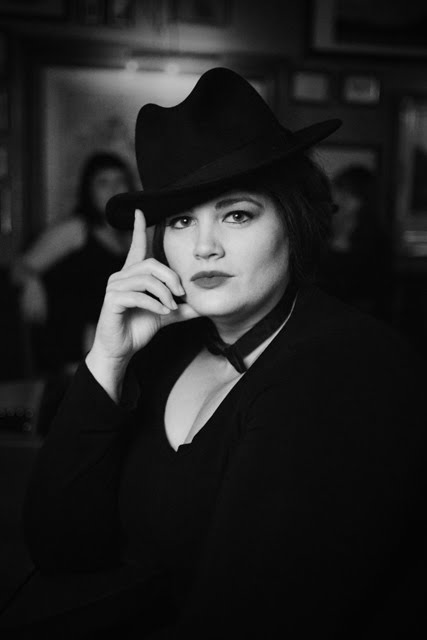
“Leave your troubles outside.  So… life is disappointing?  Forget it!  We have no troubles here!  Here life is beautiful…”  And that’s just what the show of Cabaret was.  The second the Emcee (Trish Fountain) walked onstage, the audience was captivated.  Captivated by the orchestra, captivated by the talented Kit Kat Club boys and girls, and captivated by the hauntingly beautiful storyline.

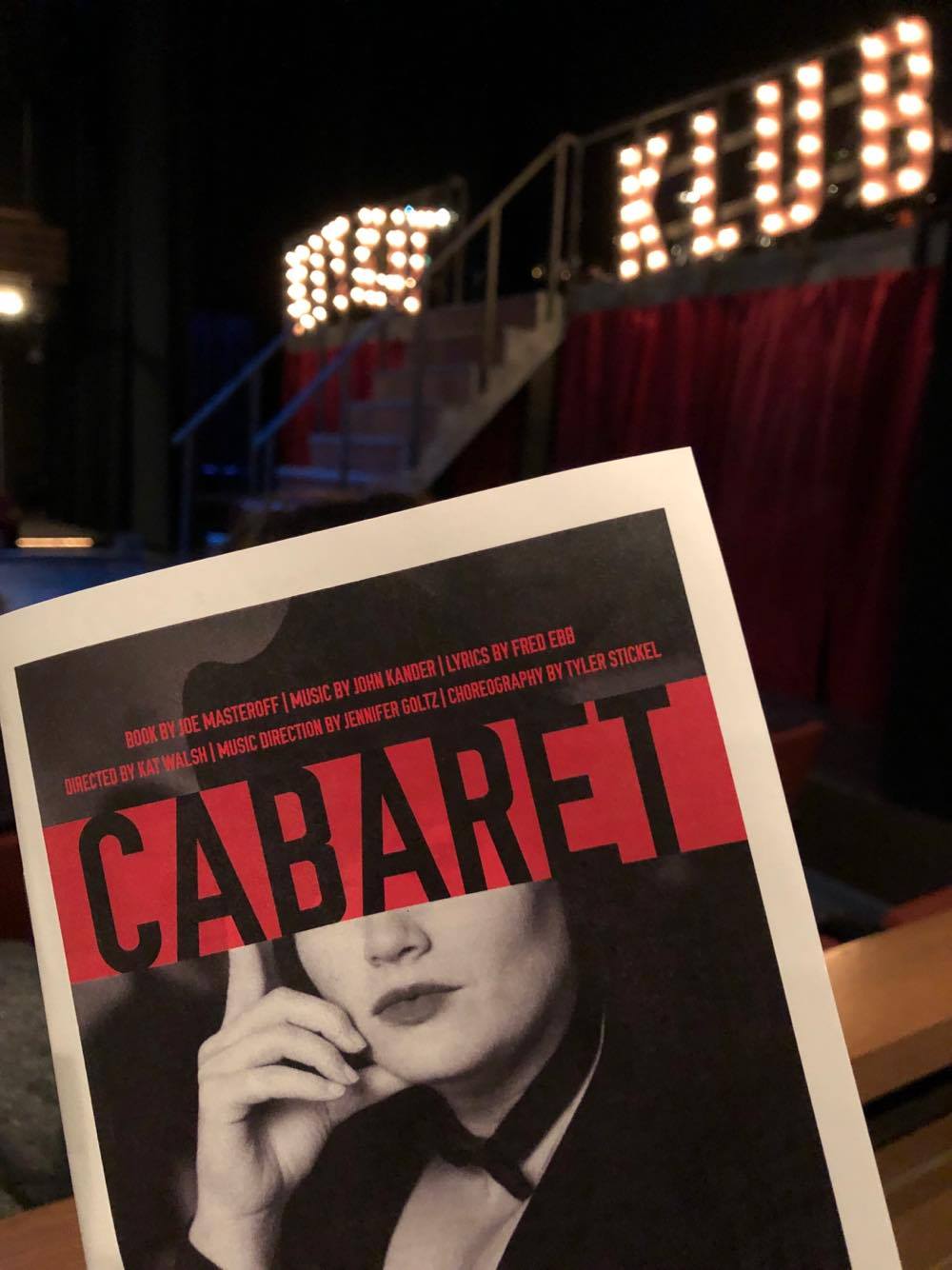
Cabaret, done by the Ann Arbor Civic Theatre, is a musical that captures a time in Berlin when Nazis were coming into power.  The story revolves around American writer Cliff Bradshaw (Chris Grimm) who travels to Germany to find inspiration for his novel.  That’s where he meets “mysterious and fascinating” cabaret performer Sally Bowles (Laura Dysarczyk) from England.  Along the way, we meet lovable characters such as Fraulein Schneider (Jessica Ryder) and Herr Schultz (Edmond Reynolds).

The Ann Arbor Civic Theatre did this show justice.  So many emotions were felt throughout.  Love for newly formed relationships, uncomfortableness for moments that left the audience in silence, and pain for the decline of characters and political situations.  Moments left the audience with their mouths wide open, shocked.  And at the end, the Emcee reminds them of the troubles that they have left behind… Is it because the troubles have actually disappeared?  Or is it because they realized that their troubles are so small compared to the one’s of the characters’ onstage?  Just something to think about while leaving the theatre, not knowing what emotions to feel.

This sold out show was performed beautifully.  Unfortunately it is over now, but I highly recommend seeing more shows done by the Ann Arbor Civic Theatre.  Information and tickets can be found at: http://www.a2ct.org/.
REVIEW: “A-maize-ing” SMTD

The University of Michigan is hosting an overwhelming number of events this weekend in celebration of the bicentennial, and it’s been wonderful to see how all of the different schools within the University have found a way to celebrate what they do. Some schools have hosted high-stakes competitions, others have started important dialogues with the community, and still others have found unique ways to share the talents and accomplishments of their students with an audience. This seemed to be the purpose of Friday night’s “A-maize-ing SMTD” program in Hill Auditorium, and I am confident that School of Music, Theater, and Dance accomplished its goal of celebrating the talent of the student body with an appreciative audience.

The 90-minute program was similar in design to Michigan’s well-known, annual Collage concert: a wide variety of high-quality, 4-minute acts from all departments within SMTD followed one another in rapid succession. There was no intermission, but the house lights were left on so that audience members could feel free to enter and exit the space at their leisure.

I was glad to have stayed for the entire concert. I thoroughly enjoyed the pacing and wide variety of the evening. The program darted between exceptional performances of classical chamber music, to theatrical performances, to jazz-inspired grooves, representing the talents of several Michigan composers, actors, dancers, singers, and instrumentalists.

While every performance was engaging and showcased the utmost artistry and professionalism, the acts that stood out to me most were the ones with music composed by a living, Michigan-based composer. Nathan Thatcher’s Ebb & Flow for flute, viola, and harp sparkled magnificently alongside the graceful, yet large, light-strewn, ribbony river puppets created by a Michigan puppetry class. I felt very lucky to relive an excerpt of composer Douglas Hertz and choreographer Al Evangelista’s Saeculum (which premiered earlier this year), a massive feat of collaboration between composer, chamber choir, string quartet, and dancers, as the piece is difficult to perform. Professor Stephen Rush’s miniature funk opera cast the founding of this institution in a very different light (although I do wish that the sound had been mixed better, so that I could have appreciated all of the sharp remarks). The Vanguard Reed Quintet and Sapphirus Saxophone Quartet exuded immaculate tone and blend in their performances of works by Michigan alums and faculty. Tristan Cappel’s quartet performed his own relentless, rhythmically and harmonically tight jazz composition for two saxophones, bass, and drums.

As a student of the SMTD, it always brings me joy whenever I get to watch my talented friends and colleagues perform. “A-maize-ing SMTD” was wonderful because it was a rare opportunity to see multiple performing arts departments onstage together. Watching this performance certainly made me proud to be a Wolverine.


PREVIEW: The Milk Carton Kids

I used to think I didn’t like folk music, but that was before I went to The Ark. From my first show, I was hooked. Folk is usually centered around simple instrumentation and exquisite harmonies, which combined with the venue’s exceptional acoustics is a match made in heaven. The Ark only seats 400, so even the introduction to a song can feel like an intimate conversation with the band. After the show, you can often meet them.

This Halloween, if costumes and haunted houses aren’t your thing, here’s an alternative: come to The Ark to see The Milk Carton Kids! They’re an indie folk duo that has been nominated for a Grammy, toured with The Lumineers, and been praised by Sara Bareilles, and they even have a song called Michigan. The Ark’s website sums them up using the phrase “haunting vocal harmonies” and that alone is enough to make me want to drop everything and come to The Ark Tuesday night.

The Milk Carton Kids with opening act Sammy Miller and the Congregation come to The Ark Tuesday, October 31 at 8:00 PM. You can buy general admission tickets for $35 at The Ark, at the Michigan Union Ticket Office, or online at theark.org.

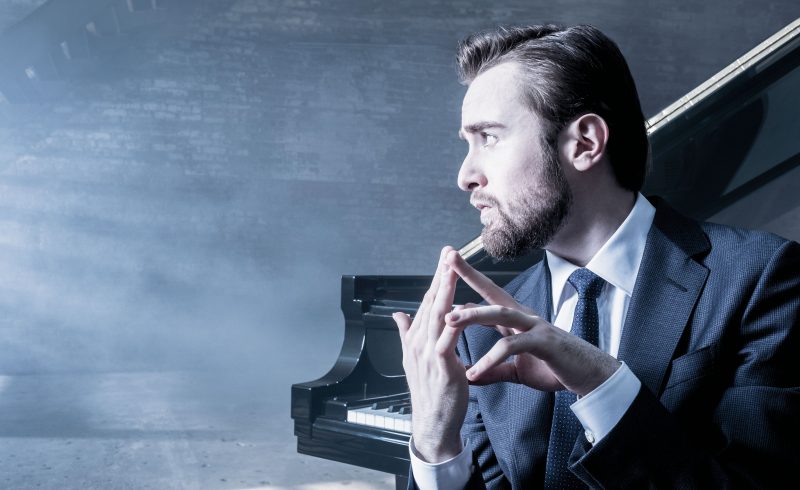
REVIEW: Daniil Trifonov, piano “An Homage to Chopin”

What’s better than a night of Chopin?

A night of Chopin performed by Daniil Trifonov.

There was everything a piano concert should have: the loud and the soft; the fast and the slow; the touch and the feel. There are things many piano concerts lack: the emotion, the excitement, the energy, the presence. Trifonov was very much emotional and exciting and energetic and present. He managed to accomplish everything a musician hopes to achieve in their lifetime in just two hours of wondrous harmonies and melodies.

The first half of his program was all works inspired by Chopin. My favorite from this section was the excerpt from Carnaval, Op. 9 by Schumann. It was fun and lighthearted, and Grieg’s Moods that followed afterwards created a stark contrast that really captured the range of music and style that Chopin influenced, as well as the musicianship talent of Trifonov.

My view of Trifonov from the balcony

While all the music was masterful and amazing, my favorite pieces would still have to be the Chopin works in the second half. His Variations on “La ci darem la mano” from Don Giovanni, Op. 2 were full of energy and attitude. I’m a sucker for variations, and this one was no exception.

Sonata No. 2 in b-flat minor, Op. 35 started out with a bang and it ended with a bang, and everything in between was just as grand. Trifonov showed off all the technique he has mastered, but the best moment came during Marche funèbre: Lento, when the entire room was silent, and the soft, somber notes from the piano filled the room in a way no fortissimo ever could. There were chills, and I was left speechless.

The music finished sooner than I wanted, and the entire auditorium was on its feet, cheering and clapping and whistling for more—and more is what we got. Trifonov came back out and played a slower piece, which I thought was unusual for an encore, but he pulled it off, treating the audience to this heartfelt piece. Again, it ended, but we wanted more.

And this is the point where I literally gasped and the entire night became more perfect than it already was.

For his second encore, Trifonov performed FantaisieImpromptu in C-sharp minor, Op. 66, which I myself played four years ago, and it’s been one of my favorite songs ever since I heard my older sister play it. Hearing Trifonov play it, however, was a whole new experience. The notes I knew by heart suddenly came alive in a way that’s never been played before, and I really felt this song in a whole new light.

Again, we hoped for more, but sadly, time had passed and it was officially over. However, his music has found its place into my memory and into my heart. The night came to an end, but his music lives on in me and everyone that attended this concert.

Daniil Trifonov has been called the greatest pianist of our generation, and after hearing him grace the stage with Chopin and many more at Hill Auditorium, I could not agree more.

REVIEW: Blade Runner 2049

I walked into Blade Runner 2049 not really sure what to expect. It had gotten really good reviews, particularly in its role as a follow-up to the 1982 science fiction classic Blade Runner. I was coming in without actually having seen the original Blade Runner, and I was interested in the idea of seeing a sequel without having watched the original movie. I wasn’t sure whether this perspective was going to help me. In the end, I think it ended up sort of doing both.

Blade Runner focuses on K (Ryan Gosling), a bioengineered human — known as a “replicant” — who works for the LAPD as a “blade runner,” seeking out older models of replicants and killing, or “retiring,” them. The lingo sounds like a lot from that sentence, but it’s really not too hard to get the hang of. After the LAPD learns that a female replicant once gave birth to a child, K is ordered to find the child and retire it, since his boss worries that the knowledge that replicants can reproduce could lend weight to growing replicant freedom movements and ultimately come to threaten the order of society. This mission brings K into contact with many interesting characters, such as “memory-maker” Dr. Ana Stelline (Carla Juri) and Niander Wallace (Jared Leto), the owner of the company that manufactures replicants.

The film overall is both gripping and visually beautiful. There’s an undercurrent of environmental collapse, which by 2049 has left California reduced to a rainy, snowy wasteland. It’s easy to become invested in the character of K, as he navigates a relationship with his artificial-intelligence girlfriend Joi (Ana de Armas) and begins to question whether he is actually the very child he is supposed to kill. The story ends with a delightful twist that I won’t reveal here, but that reinforces its overall touching messages about humanity and the innate beauty of the world.

There were a few aspects in which the film seemed to lag a little. At two hours and forty-three minutes long, there were a few scenes that dragged out more than they really needed to, and Leto’s character, while well played, may not have needed to be there at all. He represented an important aspect of how people are often treated by corporations, but his science-fiction God complex wasn’t really anything we haven’t seen before. The far more interesting and convincing villain came in the character of his replicant assistant, Luv (Sylvia Hoeks). She was the one who represented the realest threat and seemed the most three-dimensional, the one who really struck fear in the heart whenever she appeared. (I was also expecting to see more of Harrison Ford based on the promotional posters, but he played the part of Rick Deckard so convincingly and I was so happy when he did show up that I forgot about this pretty easily.)

Blade Runner 2049 was ultimately a captivating story and a joy to watch. It wasn’t the action-packed thrill ride one sometimes expects from science fiction stories, favoring instead a more thoughtful, cinematic, and existential approach. But it pulled it off brilliantly, and managed to convincingly revive some of Blade Runner’s original storylines while also telling an appealing story of its own.

PREVIEW: Cabaret

The Ann Arbor Civic Theatre is bringing the classic show of Cabaret to the stage!  If you’ve never seen this show before, I would highly recommend it!  And I haven’t even seen the performance yet!  But the story itself is so beautifully heartbreaking.  I had the honor of assistant directing it at a different theatre last year, so I am super interested in seeing how they transform the story through different eyes.

I won’t spoil much of the story right now, but as the Ann Arbor Civic Theatre posted in their website, “Set against the crumbling decadence of the [Kit Kat Club], with darkly witty, bawdy, and sometimes scathing songs, Cabaret is a reminder of what the winds of political change, particularly when ignored, can bring.”  Like I said, you have to see this show at least once in your lifetime!  So might as well make it now!  And I suggest bringing some tissues 🙂

Cabaret runs at the Arthur Miller Theatre, October 26-29.  The Thursday show is sold out, but Friday through Sunday still have tickets!  Tickets are $14-16.  Buy them online now at http://www.a2ct.org/tickets/buytickets.

Photo Credit: found on their website at http://www.a2ct.org/.