
REVIEW: UMS 101 Ballet Folklórico de México de Amalia Hernández

Going to Ballet Folklórico on Sunday, February 6th was one of the best impulsive decisions I have made this year so far. Tucked away in the third-floor balcony seat on the day of the performance, I didn’t realize that my neck is hurting so much from craning to get better until the show was finished. Awestruck by the musical inspiration that the orchestra provided and dazed by the swirling colorful skirts, I found myself registering for the follow-up seminar event, UMS 101: Ballet Folklórico, held at Cahoots on February 9th.

The event was led by Susan Quintanilla, the founder, and director of El Ballet Folklórico Estudiantil. She gave a presentation to deepen the understanding about the performance; ranging from the diversity of dance depending on region, how the dance is a fusion of different cultures and demonstration of stage costumes used in the performance. Up close, the costumes were more colorful and detailed than what I expected when I was seeing the performance. Those layers of laces in skirts! The presentation was accompanied by a band from the same organization consisting of violins, trumpets, a guitarron, a vihuela, and a guitar. Every once in a while, the audience had the pleasure of hearing live music that was mentioned in the presentation. Perhaps the instrument that caught the audience’s attention the most was the guitarron-a gigantic guitar with a convex body that makes woody, deep sounds. It plays a similar role to drum and bass in a rock band setting, although it had the gorgeous and humorous sound that only a wooden string instrument could make.

The scholastic, appreciative atmosphere of the program changed 360 degrees when Ms. Quintanilla invited everyone to learn a few dance moves from the ballet. We learned four or five dance moves and danced under Ms. Quintanilla’s instruction as the band played along. I enjoyed myself highly, although I was glad that the conference room wasn’t surrounded by mirrors as God had not granted me the talent in dancing. The opportunity to dance to great live music was a rare one, so I was highly honored that I could fumble and skip to the gorgeous sound of the band. Even though the audience consisted of people of different ages, all the people seem to be enjoying themselves a lot as they skipped, turned, and explored dance moves. Later, the session ended with a gorgeous singalong lead by the band and free and open questions and answers.

The questions were usually focused on the magical experience that the majority of the audience had experienced in the performance. We learned the secret of how the dancers could change so quickly, that the band follows the dance rather than vice versa, which is very unique, and other backstage stories that only people who have experience of performing dance could have. I couldn’t resist the urge to ask whether the shoes that make the merry ‘clink’ sounds are heavy or not and got a very sincere reply from the performers themselves that it wasn’t heavy at all.

Of course, I became to love the performance even more after learning more about it. Our little dance experience, the awe of listening to the harmony of the band once again, the experience of liveliness, all of it was great but to summarize what I really loved about this special experience in one sentence: I loved that the performance in itself is a celebration of diversity, equity, and inclusion. The ballet included diverse traditional dances from different regions of Mexico. Moreover, the conversion is not limited to the inside of Mexican borders-we watched a German dance performance the band demonstrated a piece of Mexican dance music influenced by music from the video. I’m pretty sure that anyone from any cultural background would find something to love in ballet Folklórico. Next time, if the team hit the town again, please invest an afternoon on it- you’ll have the impulsion, like me, to drive to Flint, the location of the headquarter of the company, to see more of the colorful wonders.


*The Featured image is the promotion image of the dance company that ran the workshop, not the image of the event
 

REVIEW: dodie

I’ve been a follower of dodie since her YouTube days—singer-songwriter Dodie Clark is a gentle ball of light who has never failed to delight with her original songs, often demoed on her YouTube page with simple acoustic guitar/ukelele and dodie’s soft voice. dodie played at the Royal Oak Music Theatre last night as part of her Build a Problem tour. It was a fantastically orchestrated concert, from beginning to end.

Before dodie, we got to see Lizzy McAlpine, a 22-year-old singer-songwriter from Philadelphia, as the opening act. McAlpine commanded the stage with just her guitar and indescribably smooth voice, playing snippets of newly released music, old top hits, a fun cover of Wheatus’ “Teenage Dirtbag,” and a soon to be released song called “Ceiling” that the audience listened to with reverent ears.

After McAlpine’s lovely acoustic set, we were ready for dodie, awaiting her appearance with great anticipation. The hints of strings tuning and lights changing signaled the show was about the begin, and soon enough a shimmery bright blue curtain was falling away to reveal dodie and her lovely band, complete with musician friend Orla Gartland backing up on guitar, keys, and sometimes percussion.

The concert was both soft and energetic, with moments ranging from the heartbreaking, pining song “When” to the incredibly fun dance jam “In the Middle” (complete with cute choreography from the band). dodie jumped from ukulele to piano to guitar to clarinet to percussion, interacting with her band and delivering short asides to the audience. It was a treat to watch such a talented, angelic human doing their thing on stage. It was incredible to see her in person.


dodie’s concert was a kind and open space. Crowd members were kind to each other, complimenting on outfits and hairstyles, singing along but respectfully listening as well. If you aren’t familiar with dodie, I recommend checking her out, and seeking out the experience of a concert one day.

REVIEW: Layl (Night): A Performance by Ali Chahrour

Layl

The Arabic word for night, Layl is a dance concert from Ali Chahrour. It tells the cultural stories from the Levant, Mesopotamia, and other love stories through dance and song. The stage becomes a world in which Chahrour choreographs the performance to symbolize each chapter in the lovers’ story and accompanies them with live music throughout the show. What set the dance performance apart from others was the use of Arabic song and dialogue, and even Syriac poems. The program book contained a full text of the performance in English which wasn’t too difficult to follow alongside the Arabic live performance. I had the pleasure of watching the performance this past Saturday, February 12 at the Power Center in Ann Arbor.

In lieu of Valentine’s Day, this was a moving performance to attend. Chahrour develops a romantic aura throughout the room as the story progressed between two lovers with a tragic fate. The audience followed as the lovers dealt with societal challenges, religious systems, and even severe consequences for their love. Despite the foreign component of the dance performance, these are not new struggles. More importantly, love was clear in the show. It goes to show how such passion is a universal language with no barriers. Yet, this wasn’t the corny, bright pink kind of love you might find on drugstore shelves this week. This love was a lot more powerful. Each performer captured this raw form of love through their dramatic movements and vocal range. I particularly enjoyed each song and poem that sounded like a lullaby at times. The words, however, offer more :

My eyes will not look at another’s beauty / And thoughts of only you occupy my mind 

When I asked  heart to be patient / My heart responded I cannot wait

Oh the eyes that have made me suffer, Oh the eyelashes that have left me

And oh my heart be patient, wait for those who have deserted me 

These specific lines struck me. They highlight the way love only allows us to see one person, even if that one person has left us. It seems like an illness at first, rather than something revered. It also reminds me of how love is never lost by a lover. Instead, it is always there and waiting for the object of their affection. Love is a moving, undying force and the patience required of waiting feels almost unbearable. Love itself can be unbearable. This performance shows how love is tumultuous, painful, and even everlasting across time, space, and more.

At the end of at all, Chahrour has me wondering why the night? Why layl?

REVIEW: DOGFIGHT

This weekend, the Arthur Miller Theatre buzzed with ecstatic energy and uncontainable pride during a three-night run of DOGFIGHT. I have never witnessed a musical with such raw emotional power. Set in San Fransisco in the 60s, DOGFIGHT explores the peaks and pitfalls of human experience through a realistic lens— love, death, war, and naivety culminate in a final theme of the capacity for human growth. While much of the subject matter is heavy, effortless wittiness provides balance, eliciting echoing laughs from the audience. It’s impossible not to audibly react to DOGFIGHT— you don’t realize how immersed you are until a shock pulls you back to reality.

The environment of the Arthur Miller theatre may be the perfect venue for this show— each wall lined with just a few rows of seats, the experience is intimate no matter where you are. Old televisions are perched above the rows, creatively displaying videos that draw the audience into the setting, but not in a way that overwhelms the performance. The cast of students clearly adopts their roles like a second skin. Their microexpressions and tender moments feel genuine and the chemistry between characters elevates the realism of the relationships. On top of the gut-wrenching and heartwarming theatrics, the orchestra visibly playing at the back of the stage adds another degree of genuine talent. It was refreshing— to say the least— to witness so much passion and dedication in one place.

DOGFIGHT doesn’t drag on, but rather allows just enough time for the dynamic characters to fulfill their arcs. It’s equal parts satisfying and saddening; after all, DOGFIGHT is bluntly realistic in its portrayals of war and life’s unfair battles, refusing to glaze over the grittiness of the 60s and the social dynamics of that era. The way the men talked, their speech packed with misogynistic jabs and self-absorbed ignorance, tinged with an obsession with violence, is a powerful social commentary on masculinity and war; is it an outlet? A solution? Or just a masked attempt at proving one’s worth? On the other side of the gender binary, DOGFIGHT analyzes the woman’s dilemma; can men ever be trusted to be unconditionally and honestly loving? The leading female character, Rose, is often treated as an extension of the leading male character, Eddie. I wish her character’s aspirations and confidence had been explored more outside the bounds of reactions to Eddie. However, the love story takes reasonable precedence as DOGFIGHT builds a vulnerable relationship.

DOGFIGHT was an exhilarating ride of a musical. A fervently emotional portrait of war-torn America and tough love proves that even the dark and deeply flawed is worth working for. This was one of the best free experiences I’ve had at Michigan, and I look forward to seeing more University of Michigan productions in the future.

PREVIEW: ‘Fiddler on the Roof’ In Concert

I might be considered biased in my excitement for ‘Fiddler on the Roof’ In Concert. I was involved in a production of Fiddler in high school, and I fell in love with the music. The more I looked into this performance, the more I felt that I absolutely had to see it.

The performance will be held at historic Hill Auditorium on February 19th and 20th at 8:00 p.m.  and 4:00 p.m., respectively (I personally will be attending the performance on the evening of the 19th). UMS describes the performance as a “lightly staged concert” version of the classic musical.

The Philadelphia Orchestra will be performing the first live concert of the score, accompanied by broadway singers and some students from the musical theater program here at U of M. If you aren’t excited yet, you should be.

If the pure talent and skill of a professional orchestra accompanied by Broadway Singers wasn’t enough to draw you in, there will be multiple activities leading up to the performance, which would provide an extremely immersive experience should you choose to partake. First, an ongoing exhibit in Weiser Hall (Gallery Space, 5th Floor) is displaying the art from past Fiddler performances over the past forty years. The exhibit will be open until March 18th. Second, there is an online roundtable on Wednesday, February 16th at 12:00 titled “From There to Here: The Yiddish Origins and The Cultural Travels of Fiddler on the Roof.” For more information, se the UMS webpage for the event here: From There to Here – UMS. Third, this event comes with the return of a UMS tradition of prelude dinners. This dinner will begin at 5:00 p.m. before the performance on the 19th, and costs $75 per person (a bit steep, but definitely worth mentioning).

Needless to say, there are lots of exciting things happening around this performance. I’m sure the Philadelphia Orchestra will not disappoint. If you are looking for an exciting, immersive experience to get you out of the house this weekend, consider making plans to see this performance.

Student tickets range from $12 to $20, and non-student tickets range from $17 to $86 (including UMS fees).

REVIEW: Candlelight Concert

One perk of living on campus that I’ve often taken for granted is its sheer proximity to so many great music events. As a freshman living in the dorms, this proximity was made especially apparent when I was able to simply hop over next door to the Michigan Union last Saturday evening to check out the Candelight Concert—which to me, felt like a nice personal win. 

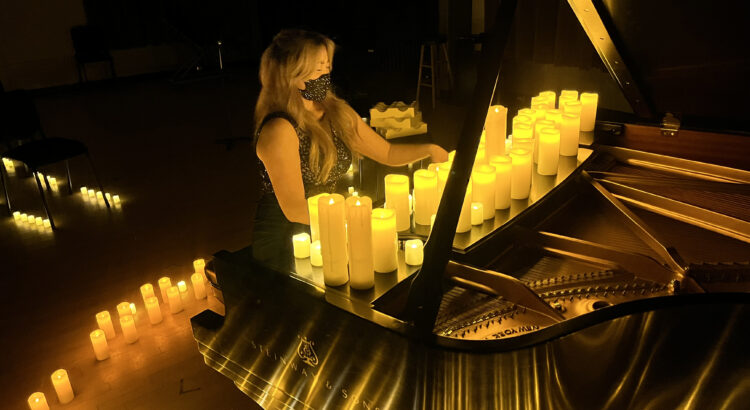
The concert featured 15 SMTD undergraduate piano students in what was a charming blend between a professional studio recital and a laid-back show-and-tell among friends. Each piece was prefaced with a quick blurb by the performer, introducing themselves with a hand-held mic and highlighting what bits of contextualization they felt were most pertinent to experiencing the music. To add to this casual intimacy, candles piled on top of the grand piano cast a warm glow on the performers’ faces as they played while even more candles lined the rows of chairs. Warm lighting typically helps to shrink the size of a room, but in combination with the extra tall ceilings of the Rogel Ballroom, created a stripped-back bubble of space. There was also a sizeable turnout—the majority of which was notably fellow students (something you don’t often see at classical concerts), which added to the welcoming atmosphere.

The program itself was designed to feel accessible to the general public, showcasing iconic classical pieces while mixing in a few less familiar ones. From a musician’s perspective, playing these widely recognized pieces is definitely a double-edged sword—they are much easier to scrutinize, and so many interpretations already exist that it is a daunting task to bring something new up to the table. However, I was pleasantly delighted by the performances of the night. Lesley Sung’s Moonlight Sonata opening was thoughtful and breathtaking, keeping the right hand triplets solid but not overpowering and leaning into the phrasing of the top melody line. Additionally, Aleks Shameti’s Chopin Nocturne Op. 9 no 2 exuded a graceful effortlessness—his dynamic control allowed for a pillow-soft left hand and a beautiful push and pull throughout the piece. Jacob Wang’s Tchaikovsky Andante Maestoso was complex and majestic, concluding the concert with huge waves of sound. 

Out of the pieces I wasn’t already familiar with, I truly enjoyed Sua Lee’s Schumann-Liszt Widmung. Her playing was bold and emotional with audible breaths between phrases, distinctly echoing the snippet of her personality I got through her introduction to the piece. Moving over to the jazz pieces, I felt that Eric Yu’s The Man I Love fit nicely into the atmosphere with rolling chords that filled the room like a warm bubble. I also loved Robert Yan’s Somewhere Over the Rainbow arrangement, which incorporated wispy, delicate Debussy-esque passages.

Overall, I thought the concert was a lovely experience. I’d like to congratulate all the performers and thank them for sharing their music!