PREVIEW: All Too Well: The Short Film

A few months ago, when I initially picked up the ukulele, the first song I decided to learn was “All Too Well” by Taylor Swift. I’m a fan of Swift’s musical lyricism and the chords for the song were easy enough. 

Months later, I would have never guessed my first ukulele song would be given its own short film.

In the Swift fandom, RED’s “All Too Well,” defied expectations and became a beloved classic after its first release nine years ago in 2012. Taylor herself has said before that she never expected the song to become so huge; it was never released as a single and it didn’t have a music video . . . but perhaps it will soon.

Tomorrow, in conjunction with the release of the re-recorded RED (Taylor’s Version), Taylor will be dropping  All Too Well: The Short Film, starring Sadie Sink, Dylan O’Brien, and Taylor herself. The film will be out on YouTube at 7 pm Eastern. Hopefully, it will include the anticipated ten-minute version of “All Too Well.”

I definitely, can’t wait to get cozy this November 12, 2021, with my own favorite red scarf. 

Happy RED-release everyone!

REVIEW: A THOUSAND WAYS (PART ONE): A PHONE CALL

I didn’t know what to expect when I sat down in my room after a long day of classes and dialed a random phone number that had been emailed to me 24 hours before. The guidelines were vague:

“On a simple phone call, you and another audience member – nameless strangers to one another – follow a carefully crafted set of directives. Throughout the journey, a portrait of each other emerges through fleeting moments of exposure and the simple sound of an unseen voice.”

That sounds very poetic and all, but how much can really happen in one phone call?, I thought.

Oh, how clueless I was.

The first thing I heard was a low-key electronic voice. “You are in the right place.” it said. “The experience will start as soon as someone joins the line. Please hold for now. There will be music.”

A strange but chill instrumental beat of guitar, drums, and what sounded like a flute and shamisen started up in my ears. A minute passed, then five. I panicked for a moment, thinking that the other audience member had bailed on me. Then the electronic voice came back and counted down.

“5,4,3,2,1.”

A short pause.

“This is not going to be a conversation, it may feel like it but it’s not. This is a way to see one another. Will you both say hello?”

The electronic voice guided us, painting scenes of a story where we were both the protagonists, prompting the conversation. The questions ranged wildly:
What color is your hair?
Name a person you love
Have you ever been to a forest?
Have you ever saved someone’s life?

Over the course of an hour, I strung together these bits and pieces of a stranger into a full human person who I felt like I could see: their weird habits, the color of their eyes, the things they’ve lost since childhood.

“I hope it’s okay to be visible like this,” the electronic voice said at one point.

I won’t spoil the call in too much detail, but I will say that I’ve never felt more like the main character in my own life. I learned things about myself that I had never slowed down enough to think about. Despite being in separate places and not even knowing each others’ names, we reached levels of intimacy and togetherness that I have not felt for a very, very long time.

At the end, we both shared something that we would remember about each other.

“Now it’s time to say goodbye,” the electronic voice said, and I felt an actual pang of sadness.

This was a conversation I will think about and treasure for the rest of my life.

If you have not yet, I would really encourage you to sign up for this experience here before it ends on November 14: https://a2sf.org/events/a-thousand-ways-part-one-a-phone-call/. I think you’ll be surprised at what you find.

REVIEW: Last Night in Soho

Eloise/Ellie/Elle is a student at the London College of Fashion with a penchant for having visions of the past. Ellie moves out of the college’s student housing and into the upstairs room of an elderly woman’s home. There, she begins to experience 1960s London when she sleeps, and is led toward a young aspiring singer named Sandie’s rise to fame. However, as Sandie discovers the journey to fame is not the glitzy, glamorous life she had expected, Sandie’s past begins to haunt Ellie in the present day. 

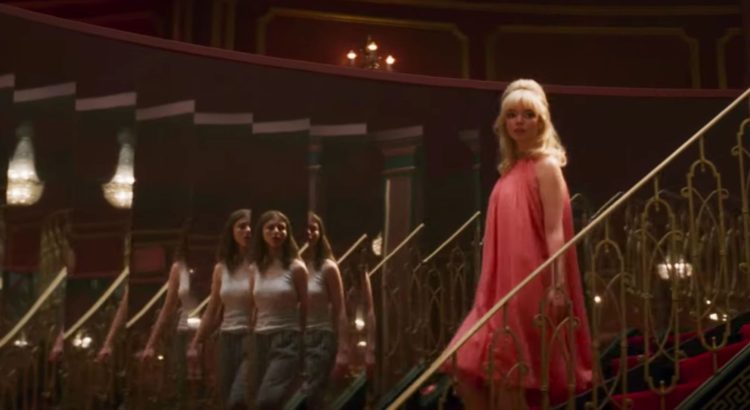
Last Night in Soho is Edgar Wright’s first psychological horror film, and this is evident. Though the film is populated with impressive visuals of beautiful and vibrant neon lighting and Sandie’s reflections being replaced by Ellie, Wright relies on a single technique to deliver all of his scares. Because of this, the climax of the film is not as effective since at that point, I had seen the same visual used over and over again in the previous scenes. 

That being said, the beginning of the film is particularly strong, and not just because it is better than the end by default. The audience is introduced to 1960s London as Sandie and Ellie do, and the late night club scene Sandie leads us through is dazzling and sinister all at the same time. However, I will say that the plot/writing of the film relies heavily on the visuals – it sometimes feels as if Wright had inventive ideas for stunning visuals and snappy editing techniques and fit the story to the imagery he had in mind. 

Though the film is so technically impressive, I question some of the writing in the film. For example, Ellie just kind of happens to be a fashion student. Yes, it is clear the film is about the dangers of romanticizing the past, however some of the logic behind the progression of the plot is questionable. It feels like Wright knew where he wanted to start and end the film, but he struggles at some points along the way. 

Aside from the visuals, a lot of credit must be given to the two lead actresses for carrying the film’s momentum. Thomasin McKenzie perfectly encapsulates Ellie’s naive, shy, and thoughtful nature, and Anya Taylor-Joy carries herself with grace as usual as Ellie’s more confident foil. Though the two actresses never share any dialogue despite being in many scenes together, McKenzie expertly portrays Ellie’s despair as she witnesses Sandie’s fall into the rabbit hole of show business. 

Overall, Last Night in Soho is more style over substance, but it is still a refreshing watch and the technical aspects are what make the film worth watching.

PREVIEW: Campus Symphony Orchestra & Campus Philharmonia Orchestra

As a self-proclaimed music nerd and lover of free things, I did not require much convincing to carve a space for the Campus Symphony Orchestra & Campus Philharmonia Orchestra’s end of the semester performance in my calendar. Plus, I deserve to enjoy the fruits of my lonely Wednesday nights一the times my roommate is all the way in North Campus for CSO rehearsals. 

The performance will feature two full-length concert programs played by each of the ensembles back to back. In my opinion, some of the pieces to look out for are the Campus Philharmonia Orchestra’s Beethoven Symphony No. 7, mvt. 2, and the Campus Symphony Orchestra’s finale Tchaikovsky Symphony No. 5 in E minor. However, the concert will also incorporate many pieces by less familiar composers such as Chad “Sir Wick” Hughes, Samuel Coleridge-Taylor, and Pietro Mascagni that are bound to be refreshing to listen to.

Come to the Hill Auditorium this Sunday, Nov. 14, at 8:00 pm to experience two great concert programs一all for the price of none! 

Event info: https://smtd.umich.edu/performances-events/events/event/?id=13942

REVIEW: Dijon – Absolutely

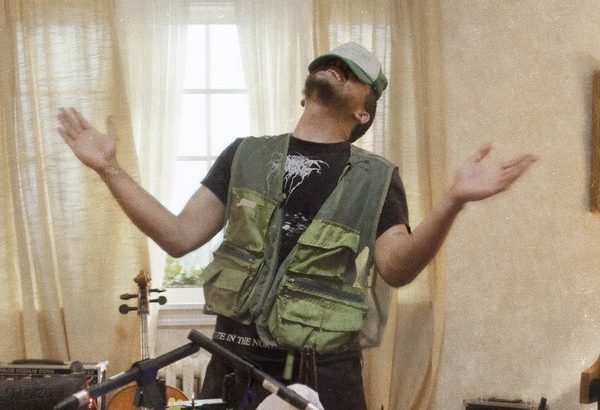
Dijon, a rising star in the indie pop/R&B scene and a familiar voice amongst the more underground and experimental artists of the younger generation, released his debut album titled Absolutely on November 4th. Known for experimenting with an array of nostalgic sounds and layered vocals, Dijon has explored a wide range of genres; Absolutely encaptures the sound that Dijon has settled on, fitting his melancholic and expressive voice perfectly. Echoing the influences of Frank Ocean and the emotional pop ballads of the late 2010s, Dijon’s voice is distinctly expressive and flexible. Each song embraces a different facet of a love story and utilizes a messy and raw style to truly capture the beauty of falling in love and the tragedy of falling out of love.

The album begins with “Big Mike’s”, an introduction that gently guides the listener through Dijon’s style. The sound is gentle and slow, soft guitar overlaid by melodic vocals–– it’s a perfect introduction to just how honest Dijon’s music gets. The album’s third track, “Many Times”, is a powerful high-tempo song dedicated to the frustration of dysfunctional relationships. Dijon sings “there you go again, head low, putting on a show again… It’s the holidays, how come it always ends this way?” The lyrics are accessible and relatable but combine with the complicated instrumentals to create a deeply emotional piece. The track transitions quickly into the slower drums of “Annie”, in which Dijon sings in a delicate high-pitched voice that pleads his lover to stay. The album ventures through the various stages and emotions of a relationship, following this pattern of ups and downs; it remains consistently engaging, the emotionality never wearing down. My favorite track is “Rodeo Clown”; Dijon’s voice is warped and distorted to capture a sense of breaking down as he calls out that his lover is “missin’ out” repeatedly. This drives home the pleading, raw energy of his music. I feel as if I’m watching a desperate argument between lovers and listening to a rebirth of Frank Ocean’s Blonde all at once, and the colorful atmosphere of it is incredibly satisfying in a largely superficial and corporate music industry.

Throughout the album, Dijon plays with experimental elements that could be seen as risky–– most of the songs lack a distinctive chorus, so the album could hardly be described as catchy. However, that is not Dijon’s purpose; the music is a raw and unfiltered dedication to pure love and loss and the immature emotions that are found in between. Unlike much of the mass-produced and money-grabbing music today that lacks any distinctive emotion or originality, Dijon is a rare voice that echoes pure honesty and feeling. He embraces his sound and does not apologize. I enjoy Dijon’s Absolutely, not for its radio-playability but for its refreshing strength.

You can stream the album for free on Spotify and it is also available on most other popular streaming services. I encourage anyone interested in diversifying their music library to give it a listen, or at least explore Dijon’s more popular and catchy tunes, such as “Skin” and “Nico’s Red Truck”.

REVIEW: University Philharmonic Orchestra’s Fall Concert

On October 14th, I had the pleasure of attending the University Philharmonic Orchestra’s fall concert at Hill Auditorium. As a freshman, I was especially excited to see this instrumental group as they feature an all-freshman string section. The University Philharmonic Orchestra program, in particular, is designed to allow student musicians to sharpen their performance skills while playing world-renowned works in a large ensemble setting.

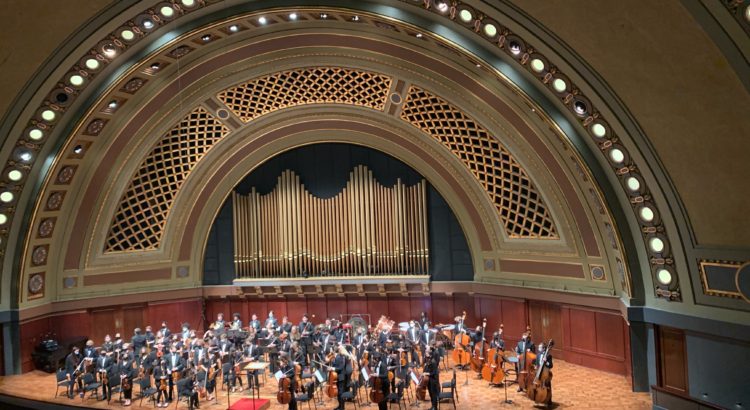
Boasting four diverse musical selections and a special organ feature by world-renowned organist James Kibbie, the concert was truly entertaining. The excitement of the students in the orchestra was palpable — adding to my enjoyment of the evening. Further, Hill’s exquisite interior added frill to the already lively atmosphere. I would, however, have wished that there were more even people in the audience, especially given that Hill is an exceptionally large venue.

The orchestra opened the concert on a bold and majestic note with “As Dancing is to Architecture” (1996) by Christopher Theofanidis. This piece highlighted the orchestra’s ability to infuse harrowing and meaningful volume dynamics in a piece. The sharp shifts in volume kept me deeply engaged. “As Dancing is to Architecture” was a thrilling piece played beautifully by the group.

The second composition, “Czech Suite, op. 39,” (1879) by Antonín Dvořák was perhaps the most well-known piece played during the concert. Much longer than the previous selection, this composition showcased the group’s stamina and concentration. I enjoyed each of the five movements of the suite and further appreciated the large stylistic variation between them. In particular, I especially loved the dynamic second movement “Polka: Allegretto giousto.” This movement combines smooth and traditional polka cadences with stark melodic shifts. Moreover, the composition begins somber but ends in an upbeat manner — an unexpected twist. Additionally, the fourth movement “Romance: Andante con moto” displayed the prowess of the flute section as their beautiful melodies were fundamental to the movement.

Following the Dvořák suite, was Johannes Brahms’ “Variations on a Theme of Haydn, op 56a (1873). Despite the title of this piece, this composition does not borrow themes from famed composer Joseph Haydn. Instead, it borrows from a lesser-known composer whose piece, “Chorale St. Antoni” was incorrectly accredited to Haydn. This intense piece was a testament to the orchestras’ musicality as it was infused with deep, palpable emotion. It was performed beautifully.

The final piece “Toccata Festiva” (1960) by Samuel Barber, which featured organist James Kibbie, was my favorite. In order to perform this, chairs were rearranged so that an organ could be raised from beneath the stage. Watching this aspect of the setup process only made me more eager to hear the organ. Luckily, Kibbie did not disappoint. Somber yet majestic, I was captivated for the entire duration of the piece. It was truly incredible to watch Kibbie traverse both the foot pedals and the keyboards of the organ. Everyone around me, myself included, stared at him and leaned forward in their seats — desperate to get a closer view. I have never been more in awe during a performance than while watching Kibbie’s organ solo that occurs about halfway into the piece. The ominous and rich low organ notes reverberated throughout the entire room. I was further amazed that Kibbie seemingly performed the quick and difficult solo section with ease and grace. It was an amazing performance by Kibbie and the rest of the orchestra.

I would recommend that anyone who has the opportunity to see the University Philharmonic Orchestra perform most definitely should.