
REVIEW: Dragnet Girl

Ichiro Kataoka performing

This Monday Ann Arbor was treated to something special, a screening of the Japanese silent film Dragnet Girl narrated live by of a modern-day benshi, Ichiro Kataoka. Benshi are traditional “narrators” of silent movies in Japan, that bothwrite and perform scripts for silent movies of all types.  Benshi were extremely popular in Japan during the silent movie era. Now there are about 10 benshi still performing for audiences both within Japan, and across the globe. Ichiro Kataoka is one of the very best amongst this selective number, and he travels the most out of the 10, this night gracing our town of Ann Arbor.

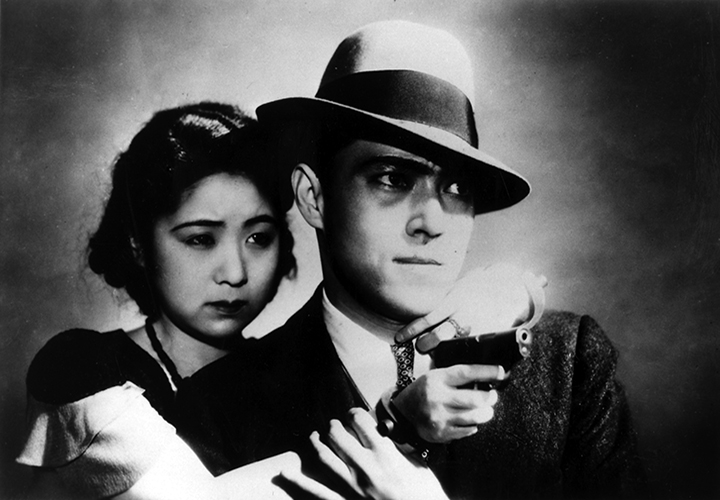
Dragnet Girl is a 1933 Japanese silent film about a gangster, Joji,  who meets the innocent and kindhearted Kazuko.  Kazuko enlists his help in looking after her brother who is slowly getting swept up in the dangers of the udnerworld. Joji’s girlfriend, Tokiko, gets lost in  a haze of jealousy, but eventually falls for the Kazuko’s wholesome charm.  Influenced by the innocent Kazuko, Tokiko dreams of finding redemption herself.

Most surprisingly, I was was able to be completely immersed in the film despite not understanding a word of Japanese myself.  I credit most of this phenomenon to the sheer talent of the benshi, Ichiro Kataoka.  While the intertitles were subtitled in English, the rest of the dialogue was pure, untranslated Japanese.  Despite this setback I was able to understand immediately the gist of what was being said by a mix of context, visual cues, and the pure emotion in the benshi’s voice.

During one particularly emotional scene, instead of focusing on the screen I tried to focus on Ichiro Kataoka’s performance.  I was shocked to see his face contorted into the very picture of despair, his expression matching perfectly with the crying girl on the screen. As he continued his narration and performance, he wasn’t just emoting with his voice but with his entire body. You could see the shift in his face and body as he switched from one character to the next, being able to go from a young crying girl to a gruff aging man in an instant.

This screening of Dragnet Girl was a part of the film series, KURO: The Dark Edge of Japanese Filmmaking.  There are two films left in the series, Ichi the Killer and The World of Kanako.   For more information about the film series and other series held at the Michigan Theater please check out this page. 

Specifically interested in seeing a live benshi in action? Ichiro Kataoka will be coming back for a special screening of an experimental Japanese film during the upcoming Ann Arbor Film Festival, so keep your ears pricked for upcoming news.
REVIEW: Moonlight Film Screening OSCAR WINNER

I’m glad Moonlight won Best Picture over La La Land.  Most  of Moonlight is bleak, yet beautiful; it’s simple, yet incredibly diverse in the range of emotion that flit across the screen.

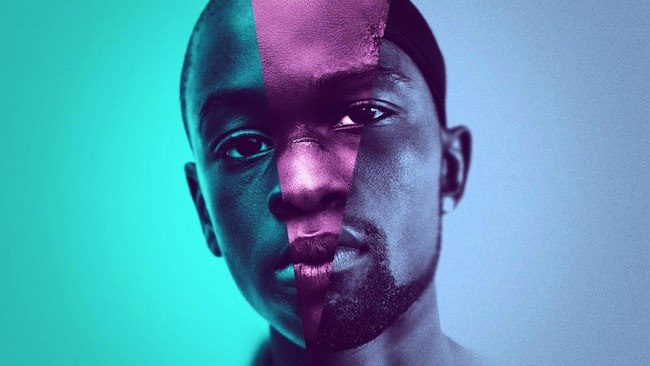
The film follows Chiron through three stages of his life: “little” catches him as an adolescent boy, “Chiron” offers a few scenes from his teenage years, and “black” shows us a glimpse of the man he eventually becomes. One of the things I liked most about Moonlight was that it never ties anything up neatly in a bow.

At every moment, even in the final shot of the film, Chiron struggles with his sexuality and identity. Juan, played by Mahershala Ali, plays an anchoring father figure during the first third of the film. Then, tragically, he disappears from Chiron’s life due to an off screen death, leaving Chiron floundering when he needs a powerful male figure the most. Chiron eventually becomes a drug dealer, just like Juan, and even adopts the same clothing style and mannerisms as his de facto father.

Although Mahershala Ali won the Oscar for best supporting actor, every single performance in Moonlight is incredible. The film is minimal on dialogue, so the actors do much of the speaking with their faces and body movements. When we do hear someone speaking on screen, the words seem so much more powerful, even though most of the time they’re phrases we hear in everyday conversation.

Somehow Moonlight manages to look incredible on a 1.5 million dollar budget. Much of the film is tinged with cool tones, marked at times by swaths of violent red.  The lighting is deliberate, and complements perfectly a story Juan tells about being called “Moonlight” when he was a boy. The cinematography too is powerful, capturing the range of emotions that occur in each scene.

Moonlight would have felt a lot like a modern day Boyz n the Hood if it wasn’t for the haunting, string-heavy score throughout the film. Almost like in a horror film, the strings quickened during key sequences, but remained beautiful.

I was happy to see a packed room at the Michigan League.  Moonlight is an incredible movie, and I agree in every way that it deserved Best Picture over La La Land. Moonlight has no fears about shoving us face first into questions of what it means to be human without bothering to answer them. Moonlight knows that being human and finding your identity is complicated, and it doesn’t wrap things up in a neat little box.

PREVIEW: Dragnet Girl

This Monday the Kuro Japanese film series brings a special treat to the Michigan Theater, a screening of the classic Japanese silent film Dragnet Girl with live narration by a trained Japanese Benshi.  Benshi is a term for the narrators of silent films and foreign films that were vastly popular in Japan in the early days of film.  There are still some practicing Benshi in Japan, like Ichiro Kataoka who will be flying in to Ann Arbor to give this presentation.  This is a truly unique experience that breaths new life and dimension into the film by giving it a live element.

Dragnet Girl will be playing this Monday, March 6th at 7:00 PM at the Michigan Theater.  Student tickets will be 8$ with a valid student ID. It also will be included in the passport to the arts which will give students a free entry!

PREVIEW: Moonlight Film Screening OSCAR WINNER

February is Black History Month, but that doesn’t mean appreciation of Black History has to be contained in that single month.

On March 7th, there will be a FREE screening of the Oscar-winning film Moonlight at Hatcher Grad Library.

When: Tuesday, March 7 @ 7pm

Where: University of Michigan League Ballroom

Cost: FREE

See the film that snatched Best Picture out of the hands of La La Land!

Mahershala Ali won an Oscar for his role in this film, which follows the life of a young black man as he makes the transition from child to adult in Miami.


PREVIEW: The Lego Batman Movie

Anyone who saw The Lego Movie knows that the new Lego movies are not just for kids. They are filled with awesome jokes and cameos from many famous actors. The Lego Batman Movie follows batman (voiced by Will Arnett) as he struggles to fight the Joker’s takeover of Gotham city and raise his newly adopted son. If it follows suit of the first Lego movie, then I think it will be a very funny success. The movie is showing all around Ann Arbor theaters and I believe it will be an enjoyable see to give you a break from midterms.

REVIEW: TEDx UofM 2017

Before I begin, here’s a link to the full conference in case you want to see it in its entirety.

TEDx UofM 2017 was as busy as ever, adding to the disruption part of this year’s theme: Dreamer’s and Disruptors. The army of volunteers running the independent conference have by now created a finely-tuned machine with the perfect mix of emotional roller-coaster, thought-provoking ideas, and blissful entertainment.

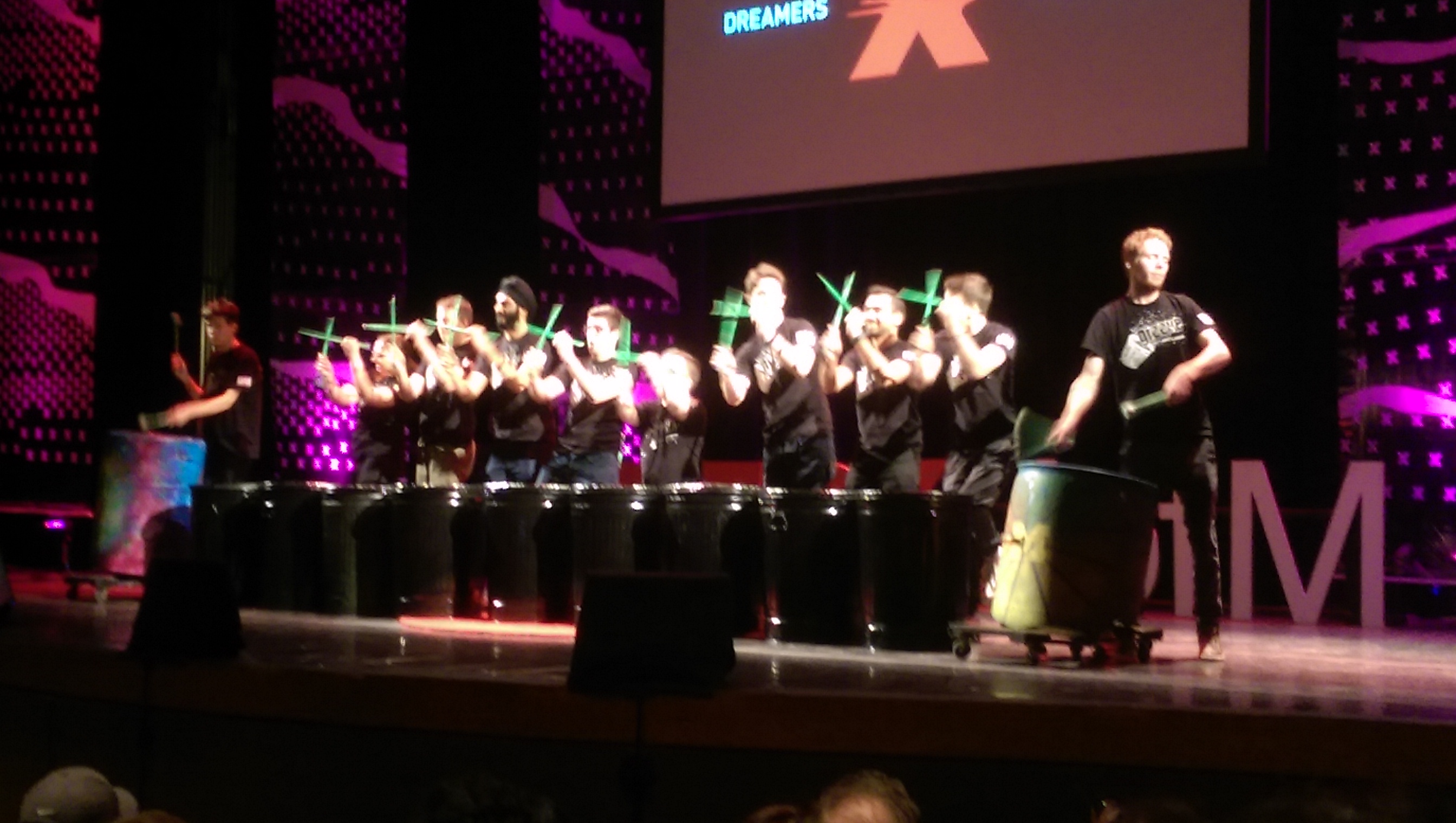
The student group Groove = bliss

A student jazz band played in the minutes before the conference started. Their grooving, polished performance was a reminder that so many students at this university are talented and sound like professionals even before they’ve graduated.

Then the first speaker took the stage. Koen Vanmechelen came all the way from Belgium to talk about chickens. Specifically, about how breeding various species of chickens can be used to teach us important lessons about human nature.

Next was Sophia Brueckner, a brilliant woman who was a preeminent software engineer at Google until she suffered an injury that prevented her from using computers for two years. She argued that we as a society have developed a dichotomy of looking at technology as either a complete disaster, or as completely awesome. Instead, she asserted, we need to approach technology with critical optimism.

Ironically, Sophia Brueckner pointed out that making an app to solve all our problems is a fallacious idea, but the 2017 TEDx prize went to a student that developed an app called FoodFind. Meant for low income families to find free food, you have to wonder how many families can actually afford and use the smartphones that the app runs on.

Caitlin Holman proposed three things we need to learn: autonomy, competency, and belonging. Videogames, she suggested, provide all of this. With that in mind, she founded GradeCraft with the purpose of making learning more “gameful.”

Erika Newman–a pediatric surgeon–talked about both clinical and personal experiences with cancer. She was introduced to the lack of information on neuroblastoma when one of her patients asked her about the disease and she realized how she didn’t have any answers. The only surprise here was that she was having trouble getting funding from the NIH to treat the cancer using DNA repair mechanisms.

Rollie Tussing and the Midwest Territory Band played during the break. Although they were a stereotypical band you’d hear in Ann Arbor (at least one instance of well-manicured beard, a cello, and music reminiscent of vintage records), they were entertaining. Their sound was both stripped down and full, and antique without feeling archaic.

Next was Abdul El-Sayed, the current Executive Director of the Detroit Health

Department. In case that didn’t already tell you what a monumental task that entails, he cited several facts about the city of 600,000+ people such as a life expectancy of 70, an asthma rate of three times that of the rest of the country, and vision and other problems that far surpass the rest of Michigan. His argument was to think about pathophysiology in the social realm so that we can help people prevent health problems from developing. Abdul was also one of the best speakers of the night and I highly recommend watching his talk at least.

Next was Jeffrey Veidlinger, a historian who went to Eastern Europe to interview survivors of the Holocaust as a way of preserving their culture via understanding Yiddish. He challenged the audience to “Ask your loved ones about their life. Ask them about their dreams. Ask them about what they cherish.”

The most heart-wrenching talk of the night came from Scott Matzka, who was a talented athlete and is now a husband and father battling ALS. This is another talk to watch, and to check out his organization MyTurn.

Documentary filmmaker Sophia Kruz was the last speaker of the evening. Showing clips from her latest documentary Little Stones, she showed how sharing individual stories is important, as well as using culture to address problems in society.